
Women in Chess: A Century of Breaking Barriers — and Why BigChess Offers a Fresh Start

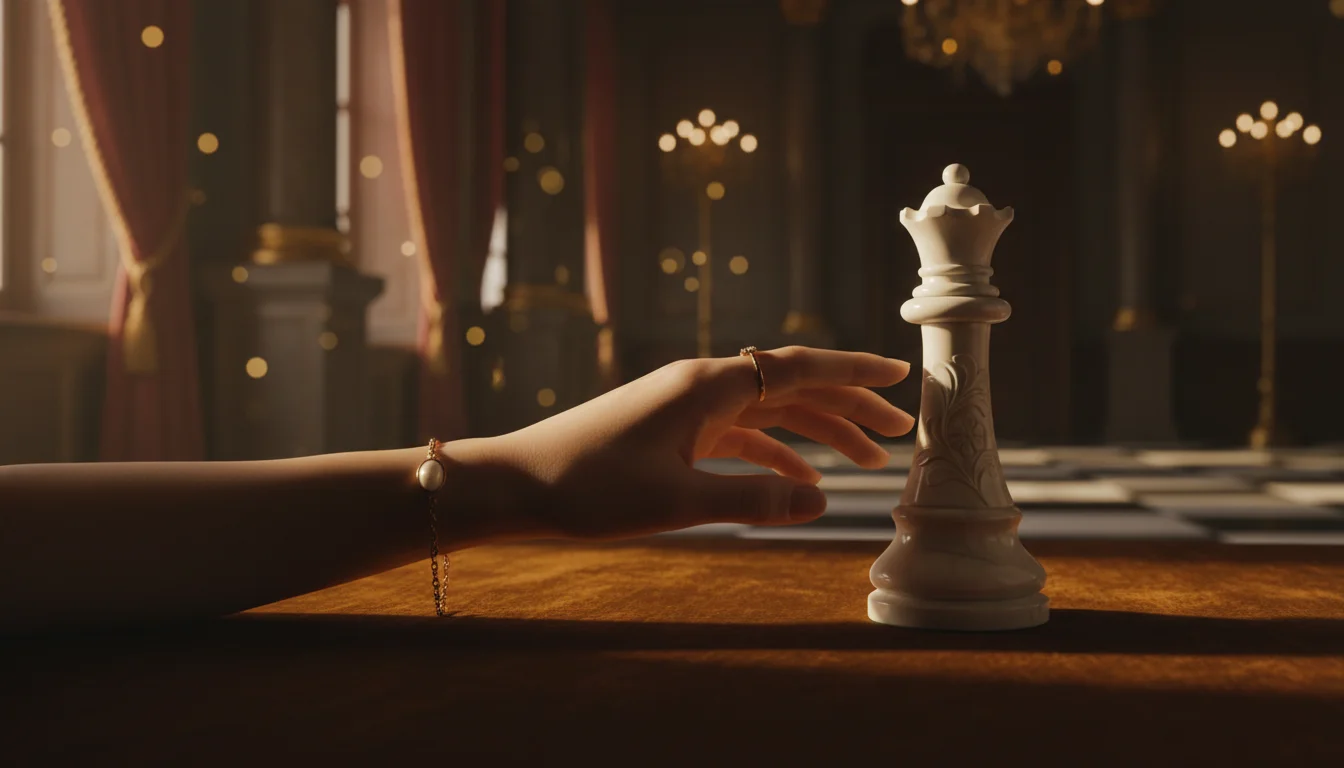
Women in Chess: A Century of Breaking Barriers — and Why BigChess Offers a Fresh Start
Published on bigchessgame.com — Chess Culture & Society
In 1927, a 21-year-old Czech-British woman named Vera Menchik walked into the first official Women's World Chess Championship in London and won. She would continue to win every subsequent Women's World Championship until her death in a German bombing raid on London in 1944 — a remarkable and tragic figure who dominated women's chess for nearly two decades, won several open tournaments against male competitors of master strength, and is widely regarded as the first professional woman chess player in history.
Vera Menchik's story contains in miniature the central tension that has defined women's chess for a century: exceptional ability meeting institutional barriers, individual brilliance navigating a structural landscape built for and by men. The story of women in chess is not a simple narrative of exclusion and breakthrough — it is a complex, often contradictory history of remarkable achievement alongside persistent inequality, of systems designed with good intentions that may have inadvertently limited ambition, and of a growing cohort of extraordinary players who have demonstrated, beyond reasonable doubt, that chess ability has nothing to do with gender.
This article traces that history — from Menchik's pioneering career through the Soviet-era champions, through Judit Polgar's extraordinary assault on the open world rankings, to the digital-native generation of players and streamers who are reshaping chess culture today. And then it considers how BigChess — the innovative 10×10 chess variant created by Ukrainian entrepreneur and Candidate Master of Sport Vilen Fatalov and available at bigchessgame.com — represents something genuinely new: a chess game where the structural advantages that male players have historically held do not exist, and where every player — regardless of gender — approaches the board on equal footing from day one.
Vera Menchik: The Pioneer Who Proved the Point
Vera Menchik was born in Moscow in 1906 to a Czech father and English mother, and learned chess as a child in Prague. When her family relocated to England in the early 1920s, she studied under Géza Maróczy, one of the strongest players of the era, and rapidly developed into a player of genuine strength. Her performance in the 1927 Women's Championship in London — the first official title sponsored by FIDE — was decisive, and she would defend it six more times over the next seventeen years.
More telling than her Women's Championship record was Menchik's performance in open tournaments against male players. She competed in numerous international tournaments where nearly all other participants were men, and while she rarely challenged for first place in these stronger fields, she consistently scored against players of master strength. She defeated notables including Max Euwe (before he became World Champion), Samuel Reshevsky, and Mir Sultan Khan — performances that were remarkable for any player of her era and that would have been considered exceptional for any male player competing against the same field.
The "Vera Menchik Club" — a sardonic informal organization of strong male players who had the misfortune of losing to her — included some of the most prominent names in interwar chess. The club's existence was a backhanded tribute: it acknowledged, through humor, that Menchik was capable of defeating the best male players when she played at her best.
Menchik's legacy is dual: she proved that a woman could compete at the highest levels of chess, and she established the Women's World Championship as a legitimate competitive institution. Both legacies have been built upon in the decades since.
The Soviet Dynasty: Nona and Maia
Nona Gaprindashvili: The First Great Dynasty Builder
After a gap in Women's World Championship competition during and after World War II, the title was revived and eventually fell into the hands of the extraordinary Soviet Georgian chess school. Nona Gaprindashvili, born in 1941 in Zugdidi, Georgia, won the Women's World Championship in 1962 and held it until 1978 — a sixteen-year reign that established her as one of the great champions in chess history, regardless of gender category.
Gaprindashvili was not content to compete only in women's events. She participated in numerous open tournaments against male grandmasters and achieved results that earned her the grandmaster title — making her in 1978 the first woman in chess history to be awarded the full (open) grandmaster title, not the separate "woman grandmaster" designation. Her achievement was a significant milestone, demonstrating that the highest male-defined tier of chess recognition was achievable by a woman.
What made Gaprindashvili exceptional beyond her results was her training methodology and competitive attitude. She trained with the same intensity as Soviet male grandmasters, studying theory comprehensively and analyzing her games rigorously. She did not accept a separate standard for women's chess — she aimed for the universal standard of grandmaster strength and achieved it.
Maia Chiburdanidze: The Teen Champion
Maia Chiburdanidze succeeded Gaprindashvili as Women's World Champion in 1978 at the age of 17 — one of the youngest world champions in chess history, in any category. She held the title until 1991, a thirteen-year reign that continued the remarkable Georgian chess tradition. Chiburdanidze was known for her universal playing style, combining tactical sharpness with deep strategic understanding, and like Gaprindashvili she competed successfully in open tournaments against top male players.
The Georgian chess school — producing two Women's World Champions in succession, both of whom competed respectably in open events — became a model for women's chess development worldwide. The success of these players demonstrated that with access to serious coaching, comprehensive theoretical preparation, and competitive opportunities equivalent to those available to male players, women could achieve chess results of the highest order.
Judit Polgar: The Greatest of All Time
No discussion of women in chess can proceed without a substantial engagement with Judit Polgar, who is simply, without qualification, the strongest female chess player in history — and one of the strongest players, full stop, ever to sit across the board from another human being.
Judit Polgar and her sisters Sofia and Susan were raised in Budapest, Hungary, according to a deliberate educational experiment by their father, Laszlo Polgar, who believed that genius is made rather than born. He chose chess as the domain of the experiment — a deliberate choice, in part because chess mastery is more objectively measurable than mastery in most fields — and began teaching his daughters chess from early childhood using systematic, intensive training methods.
The results were extraordinary. Susan became a women's world champion. Sofia became a grandmaster. And Judit became something unprecedented: a player who reached a peak ELO rating of 2735, achieving the rank of #8 in the world in 2005, and defeating more world champions in classical chess games than any other player who never held the title herself. She defeated Anatoly Karpov, Boris Spassky, Vasily Smyslov, Garry Kasparov (in a 2002 Russia vs. the Rest of the World match), and Vladimir Kramnik. She defeated Vishy Anand multiple times. She competed at the highest level of open chess for two decades without ever playing in the Women's World Championship — a deliberate choice that reflected her (and her father's) conviction that separate women's competitions were a ceiling rather than a platform.
"I don't play women's chess. I play chess." — Judit Polgar
Polgar's career is the strongest available evidence that, given equivalent training, competitive opportunity, and cultural support, women can compete at the very highest levels of chess. Her peak rating would have made her a world championship contender in most eras of chess history. Her defeats of multiple world champions were not upsets — they were the results of a player of exceptional strength meeting the best competition available and winning.
Polgar retired from active competition in 2014, but her influence continues through the Judit Polgar Chess Foundation, which promotes chess education globally and specifically works to increase girls' participation in chess. The foundation's work is a continuation of the message that Polgar's career communicated across twenty years of play: the chess board is a level field when the conditions for learning and competing are made level.
Hou Yifan: The Modern Champion
Hou Yifan of China is the strongest female chess player of the generation following Polgar. She has won the Women's World Championship four times and has, like Polgar, increasingly focused her competitive career on open tournaments rather than the women's circuit. At her peak, Hou reached a rating well above 2670 — a level that would place her in the top 100 players in the world in most historical eras.
Hou has spoken publicly and articulately about the structural issues in women's chess — the way that separate women's tournaments can create a professional environment that limits growth by reducing competitive pressure and increasing the distance from the strongest available competition. Her decision to prioritize open competition has been both a personal competitive strategy and a broader statement about where women's chess should aim.
Alexandra Botez and the Digital Generation
Alexandra Botez represents a different kind of breakthrough: not the grandmaster competing for world titles, but the chess personality building a massive public audience through streaming and content creation. With her sister Andrea, Alexandra has built one of the largest chess audiences on Twitch and YouTube, introducing millions of viewers — many of them young women and girls who had not previously engaged with chess — to the game.
The Botez sisters' impact on women's participation in chess cannot be overstated. By making chess entertaining, accessible, and visibly female, they have substantially shifted the perception of chess as a male-dominated domain. Young women watching the Botez Live stream see chess as something exciting and social — not the stereotyped image of a solitary, introverted, male-coded activity that has historically discouraged female participation.
The digital generation of women in chess — streamers, content creators, coaches, community builders — is transforming the cultural landscape of the game in ways that may ultimately have more impact on female participation than any structural change to tournament systems.
The Structural Debate: Separate Titles vs. Open Competition
The existence of separate women's chess titles — Woman Grandmaster (WGM), Woman International Master (WIM), Woman FIDE Master (WFM) — alongside the open grandmaster and international master titles is among the most debated structural features of competitive chess. The separate titles have their defenders and their critics, and the argument touches on fundamental questions about equality, opportunity, and the conditions under which talent develops.
The case for separate women's titles: In the current competitive landscape, very few women reach the top 100 in open world rankings. Separate titles create achievement milestones for women that are attainable within the existing distribution of players, providing recognition and incentive for women who are strong chess players but who are not competing for open grandmaster norms. They also support the structure of women's tournaments, which provide playing opportunities and prize funds for a category of players who might otherwise not have a competitive circuit.
The case against: Judit Polgar's career, Hou Yifan's career, and the careers of all women who have competed successfully in open events suggest that the ceiling implicit in separate women's titles is artificial. A player who can achieve the WGM title may be capable of achieving the full grandmaster title with appropriate training and competitive opportunity — but the WGM title may provide enough recognition to reduce the motivation for the additional effort required. Separate titles also perpetuate the message that women's chess is a separate and necessarily lower-tier endeavor, which affects how the game is perceived and how girls are encouraged (or not) to engage with it.
The debate has no simple resolution, and the players who have lived it — Polgar, Hou, and others — have reached different conclusions about the right path. What is clear is that the structural question cannot be separated from the sociological context in which chess is played.
Stereotype Threat and the Sociological Evidence
Research in social psychology provides important context for the gender gap in competitive chess. Stereotype threat — the phenomenon in which members of a negatively stereotyped group perform worse on a task when the stereotype is made salient — has been studied extensively in the context of gender and academic performance. The original research by Claude Steele and Joshua Aronson on race and academic performance has been replicated and extended to gender and mathematics, and to chess specifically.
A 2008 study published in the European Journal of Social Psychology found that women performed significantly worse in chess games when they were told they were playing against a man than when the opponent's gender was unspecified or stated to be female. The effect was substantial — strong enough to explain a meaningful portion of the performance gap between male and female players in mixed-gender tournaments. The mechanism is not bias or discrimination on the part of any individual: it is the internalization of cultural messages about gender and chess ability, activated at the unconscious level when the stereotype is made salient.
The implication of stereotype threat research for women in chess is significant: the performance gap that is sometimes attributed to inherent differences in chess ability may be substantially a product of the social context in which chess is played — specifically, of the cultural associations that link chess with masculinity and implicitly cast female players as interlopers in a male domain. Remove the stereotype activation, and the performance gap shrinks or disappears.
Online play — where gender is not necessarily known to the opponent — provides a natural experiment. Several studies have found that women perform better, relative to their ratings, in online chess than in over-the-board play. The reduced salience of gender in the online environment reduces stereotype threat activation, allowing women to perform closer to their actual ability level.
BigChess: A Level Field from Day One
Now consider the structural situation in BigChess — and why it offers something that classical chess genuinely cannot: a game where none of the historical advantages that male players have accumulated over generations of competitive classical chess are relevant.
No Opening Theory Advantage
In classical chess, a player who has studied opening theory comprehensively — who has memorized the Sicilian Najdorf to move 25, the Queen's Gambit Declined variations to move 20, and the Ruy Lopez Berlin Defense's endgame nuances — has a concrete advantage against a less prepared opponent. This advantage is not inherently gendered, but its accumulation has historically favored players with access to more coaching time, more competitive experience, and more chess culture — advantages that have disproportionately accrued to male players in a culture where chess has been coded as male.
BigChess eliminates this advantage entirely. The 10×10 board, the Clone piece (combining the bishop's diagonal slide with the knight's L-shaped leap), the triple pawn step option, and the extended en passant rule create a game that is sufficiently different from classical chess that no accumulated opening theory transfers. There are no BigChess opening books. There are no BigChess grandmasters with decades of competitive preparation. Every player — regardless of how many years they have invested in classical chess preparation — approaches the BigChess board as a learner, navigating positions that no one has fully analyzed.
A woman who has played classical chess for five years faces a male opponent who has played classical chess for twenty years. In classical chess, that twenty-year player has an enormous preparation advantage. In BigChess, both players are discovering the game fresh. The twenty years of preparation are still valuable — the classical chess skills of positional understanding, tactical vision, and endgame technique transfer — but the accumulated opening advantage does not.
Online Format and Reduced Social Dynamics
BigChess is played online at bigchessgame.com, available on web, iOS, and Android. The online format means that gender is not visible to opponents by default, reducing the stereotype threat activation that research has shown to depress women's performance in face-to-face chess. Players are matched by ELO rating, not by gender — the system is blind to demographic factors and rewards only one thing: chess ability.
The social dynamics that have historically made over-the-board chess tournaments uncomfortable for many women — the masculine cultural coding of chess clubs, the occasional paternalistic or dismissive attitudes from male competitors, the subtle pressure of being a visible minority in a room full of men — simply do not exist in the online BigChess environment. Every player is an avatar and a rating. The board is the only context that matters.
The Clone as an Equal-Opportunity Learning Challenge
The Clone piece — the most distinctive innovation in BigChess — must be learned by every player who picks up the game. There is no existing guide to Clone strategy. There is no grandmaster whose games can be studied for Clone technique. Every player who learns BigChess learns the Clone from the same starting point: zero accumulated knowledge, pure reasoning from the piece's movement rules.
This creates a fascinating cognitive situation. The Clone's dual movement modes — diagonal sliding and L-shaped jumping — reward exactly the kind of flexible, creative, multi-modal thinking that research on cognitive style shows is not gender-differentiated. There is no evidence that men are better at thinking about pieces that move in two ways simultaneously. There is no accumulated cultural mythology that links Clone strategy to masculinity. The Clone is entirely new, and its mastery is available to anyone who engages with the problem with sufficient focus and creativity.
A Community Being Built Now
The BigChess community at bigchessgame.com is being built from scratch. There is no entrenched male culture to navigate, no existing hierarchy of established players to displace, no decades of male-dominated tournament records to be measured against. The community's norms, its competitive culture, its heroes and champions — all of these are being established right now, by the players who are engaging with BigChess in its early years.
This is an extraordinary opportunity. The women who engage seriously with BigChess in these early years are not entering a male-dominated culture — they are shaping the culture that will define the game for future players. The first BigChess champions, the first players whose opening innovations become standard approaches, the first players whose Clone endgame technique becomes the model that others study — these pioneers are still in the process of emerging. And nothing about the game's structure prevents women from being among them.
The Future: What Women's Chess Can Become
The story of women in chess is ultimately a story about conditions: what conditions enable talent to develop, what conditions enable performance to be expressed, and what conditions are required for a player to believe that their gender is irrelevant to their chess ability.
The evidence from a century of women's chess — from Vera Menchik to Judit Polgar to Hou Yifan to the digital generation — is unambiguous: when women have access to the same training, the same competitive opportunities, and the same cultural encouragement as male players, they produce chess of the same quality. The gender gap in competitive chess is not a reflection of any inherent difference in chess ability. It is a reflection of historical conditions that have provided those equal opportunities to a much smaller proportion of women than of men.
BigChess, in its online accessibility, its equality of preparation opportunity, and its fresh-start culture, represents a small but genuine step toward those equal conditions. It is not a solution to the systemic issues of gender inequality in chess. But it is a game where, today, a woman playing BigChess at bigchessgame.com is playing on as genuinely level a field as has ever existed in competitive chess.
The frontier is open to everyone. The Clone does not know gender. The 10×10 board cares only about the strength of your moves.
Join the BigChess community and play on a level field. No memorized theory. No accumulated gender advantage. Just chess — on a 10×10 board, with a Clone piece that rewards creative thinking, available to every player equally. Start playing at bigchessgame.com, on web, iOS, and Android. The ELO system matches you against players of your own level. The game history system lets you review and improve. The puzzle system trains your tactical vision. The board is waiting — and it doesn't care about anything except the quality of your next move.
About the Author
Marat Fatalov
Co-inventor of Big Chess
High School Student, Co-inventor of Big Chess, Second Category chess player.