
What Would Capablanca, Fischer, and Kasparov Think of BigChess?

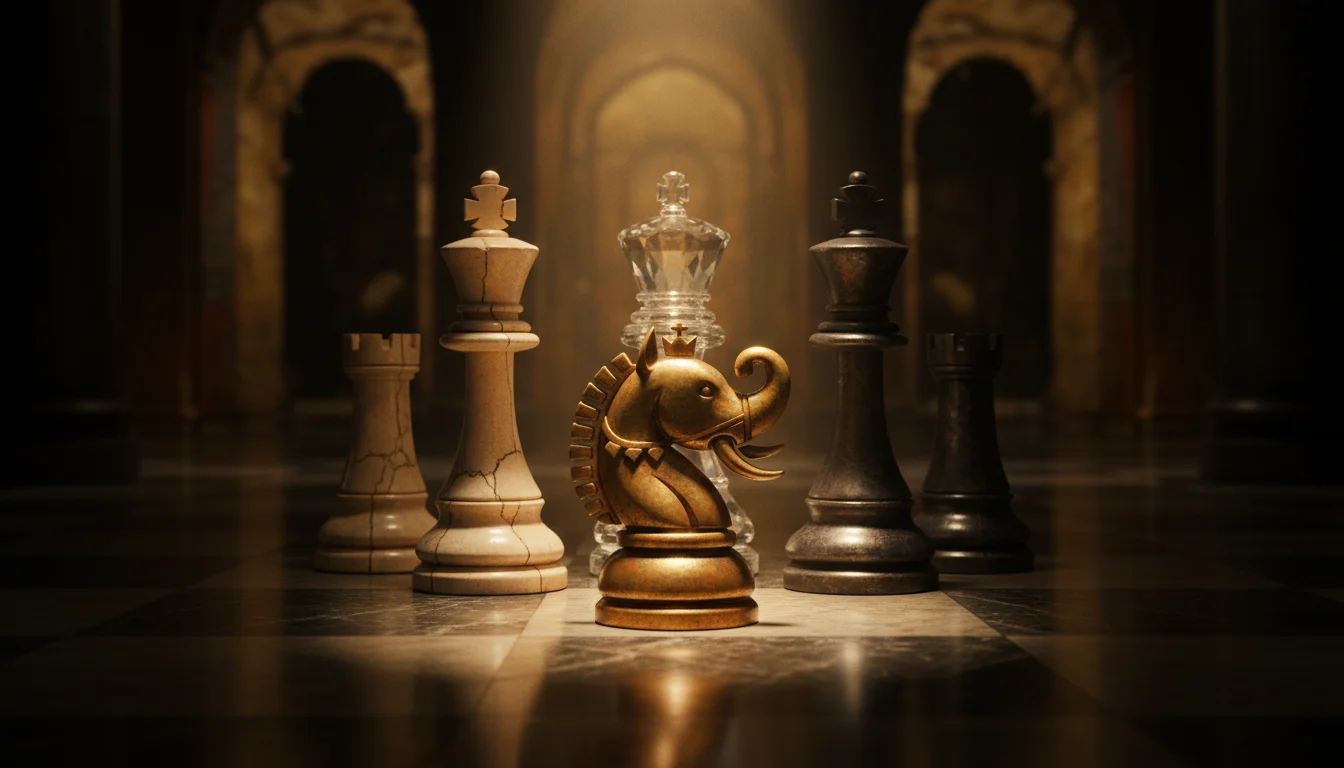
What Would Capablanca, Fischer, and Kasparov Think of BigChess?
Published at bigchessgame.com — by the BigChess editorial team
Speculation is one of chess's great pleasures. We argue endlessly about who was the greatest player of all time, how Morphy would fare against Carlsen, whether Fischer at his peak could have beaten Kasparov in a long match. These are unanswerable questions — and that is precisely what makes them so irresistible.
Here is a different kind of speculation: What would chess's greatest minds think of BigChess? Not classical chess with a minor tweak, but a genuinely reconceived game — a 10×10 board with 100 squares, a new compound piece called the Clone (combining bishop and knight movement in one body), a triple pawn step from the starting rank, extended en passant, a three-square king castling, and promotion options that include the Clone itself. The game is available today at bigchessgame.com, on iOS, and on Android.
What follows is a thought experiment grounded in everything we know about how these extraordinary players thought, wrote, and played. It is speculative — but it is not guesswork. Their games, their books, their interviews, and their competitive philosophies all point in clear directions.
José Raúl Capablanca: The Man Who Invented This Game First
We should begin with the most remarkable fact in this entire essay: José Raúl Capablanca essentially invented BigChess before BigChess existed.
In the late 1920s, Capablanca grew alarmed. Chess was dying, he believed — not from lack of interest, but from exhaustion. The great masters had memorized so much opening theory that originality was being strangled in its cradle. A game between two top players could be decided before a single pawn had been moved out of book, the result essentially predetermined by preparation. Capablanca, whose whole genius lay in elegant clarity and positional truth, found this development appalling.
His solution, which he formalized and advocated publicly, was to enlarge the board to 10×10 and add two new pieces: one combining the rook and knight, and one combining the bishop and knight. He called the latter the Archbishop.
"The game of chess has grown to such an extent in theoretical knowledge that it is now almost impossible for anyone, however gifted, to make a living as a professional player... I therefore suggest a new game."
— José Raúl Capablanca, proposing his reformed chess, circa 1927
Capablanca's proposed Archbishop is, in every functional sense, the Clone. It slides diagonally like a bishop and leaps in an L-shape like a knight. It can reach any square on the board given enough moves. It has no color limitation. It is a "complete" piece in a way that the bishop alone is not. And Capablanca proposed placing it on a 10×10 board.
The correspondences are not approximate — they are exact. BigChess is, in a very real sense, the realization of Capablanca's vision, developed independently a century later by Ukrainian entrepreneur and Candidate Master Vilen Fatalov, drawing on 40+ years of chess experience and a desire to inject freshness into the game Capablanca loved.
How Would Capablanca Play the Clone?
Studying Capablanca's games reveals a player of extraordinary positional refinement. He understood piece coordination at a level that his contemporaries could barely articulate. He famously said that chess was above all a matter of logic, and his play bore this out: no wasted moves, no speculative sacrifices without calculation, no excess. His games look effortless because he solved the position before the opponent realized there was a problem.
The Clone would have fascinated him precisely because it embodies a coordination paradox. Its bishop movement gives it range and diagonal control. Its knight movement gives it the ability to leap over pieces and attack from unexpected angles. But combining these two capabilities in one piece also means that both are constrained by the same clock — you can only move it once per turn. Choosing when to use which movement type is a subtle positional question that has no established answer, because the Clone is new.
We can imagine Capablanca approaching the Clone with the same systematic clarity he brought to rook endings. He would catalog its strengths: the ability to reach squares that neither a bishop nor knight alone can threaten in combination. He would note its weaknesses: like the bishop, it struggles against a closed pawn chain that blocks its diagonals; like the knight, it is vulnerable to being driven away from outposts by well-timed pawn advances. He would develop endgame principles for Clone versus rook, Clone versus queen, Clone versus its mirror-image opponent Clone.
In short: Capablanca would have embraced BigChess with a kind of vindicated joy. Here, finally, was the game he had been trying to build. The logical next step for a man who understood chess's geometry more deeply than almost anyone in history.
Bobby Fischer: The Genius Who Hated Draws
Bobby Fischer is harder to predict, because Fischer was harder to predict in life. He burned with a nearly supernatural intensity, was capable of extraordinary vision and extraordinary petulance in equal measure, and held opinions about chess that evolved sharply over his career. The Fischer of 1972 — who destroyed the Soviet chess machine in Reykjavik — is a different creature from the Fischer of 1996, who unveiled Fischer Random Chess (Chess960) from self-imposed exile.
But the thread connecting both Fischers is this: he despised the draw death. He believed that top-level chess had become a charade, that the vast memorization of opening theory had turned grandmaster games into elaborate performances where neither player was truly thinking — they were reciting. His Chess960 invention, which randomizes the starting position of the back rank pieces, was designed as a cure: a way to destroy preparation as a factor and force players to think from move one.
On this point, Fischer and BigChess are natural allies.
BigChess solves the preparation problem even more dramatically than Chess960. The opening theory for BigChess is essentially nonexistent. There is no Sicilian Defense on a 10×10 board. There is no Ruy Lopez, no King's Indian, no Nimzo-Indian. The Clone has no established opening repertoire. The triple pawn step from the starting rank creates pawn structures that classical theory cannot address. Every game begins in genuine terra incognita.
Fischer would have recognized this as a solution to the problem he had spent his later life railing against. Whether he would have admitted it is another question — Fischer was not a man who changed his positions gracefully. But the internal logic of his own arguments demands that he would have been drawn to any game that made pure calculation matter more than preparation.
Fischer's Playing Style and the Clone
Fischer's tactical vision was famously concrete. He calculated deeply, precisely, and without illusion. His combination of sharp opening play with ruthless technique in the endgame made him perhaps the most complete player who ever lived. He had no weaknesses that could be systematically exploited.
On a 10×10 board with 100 squares, Fischer's calculating ability would have been an enormous advantage. The tactical complexity of BigChess is greater than classical chess — there are more pieces, more possible moves per turn, longer diagonals, and the Clone adds a class of tactical motifs (Clone forks, Clone battery attacks with bishops, Clone interference sacrifices) that do not exist in classical chess. A player who can see deeply would have a larger edge in BigChess than in classical chess, because the positions are less familiar to everyone and raw calculating ability matters more.
Fischer would have reveled in finding Clone combinations that opponents had never seen before. Given his famous ability to find resources in positions that appeared lost, one imagines him discovering Clone sacrifices — offering the piece to open lines or create passed pawns — that would have taken decades to enter general theoretical knowledge.
The triple pawn step would also have suited Fischer's tactical sensibility. In classical chess, the double pawn step is a fundamental tool for seizing center space. A triple step on a 10×10 board is a more aggressive commitment, and the extended en passant rule (allowing capture on any square a triple-moving pawn passed through) creates acute tactical complications that Fischer's precision would have navigated better than almost anyone.
Would Fischer have approved of BigChess? The man was difficult. But the game was made for his deepest instincts.
Garry Kasparov: The Strategist in Uncharted Territory
Garry Kasparov is the most analytically self-aware champion in chess history. He has written more, thought more publicly, and reflected more rigorously on his own play and chess's evolution than any other player at his level. His multi-volume series "My Great Predecessors" is not merely a collection of games — it is a sustained meditation on how chess thinking evolved across generations. His battles with IBM's Deep Blue in 1996 and 1997 turned him into the sport's most prominent voice on the relationship between human creativity and machine calculation.
Two aspects of Kasparov's philosophy are particularly relevant to BigChess.
The first is his horror at the prospect of chess becoming "solved" — of the human creative element being eliminated by computer dominance and preparation. Kasparov has spoken repeatedly about how modern grandmasters are essentially trained by computers, their opening preparation guided by silicon evaluation, their calculations checked against engine lines. He finds this diminishment of the human element genuinely alarming, not merely as a practical matter but as a philosophical one. Chess, in his view, is valuable partly because it is a mirror of human reasoning — it shows what the human mind can do. A chess world dominated by computer preparation shows something else.
BigChess is, structurally, resistant to computer domination in a way that classical chess is not. The uncharted opening theory means that engines cannot feed players pre-solved lines. The Clone's movement combinations create tactical calculations that are complex enough that even strong engines may not evaluate correctly in all positions. The game is genuinely new, and newness is inherently harder for machines to master than it is for creative humans.
Kasparov would have understood this immediately.
Kasparov's Deep Preparation Meets a Game Without Preparation
The second relevant aspect of Kasparov's psychology is more interesting, because it creates a genuine tension. Kasparov was famous — perhaps more than any player before or since — for his ferocious preparation. He prepared novelties on move 20, 25, 30. He had teams of seconds. He developed opening systems in the Sicilian, the King's Indian, and other complex openings that were tailored specifically to his opponents' weaknesses. His preparation was a weapon, perhaps his most powerful weapon against players who were his tactical equals.
In BigChess, that weapon does not exist. There is no preparation in BigChess's opening, because the opening theory has not yet been developed. Every player — from the world champion to the casual amateur — starts from roughly the same position of theoretical ignorance. This would be liberating for some players and deeply uncomfortable for others. Where would Kasparov fall?
The answer, we think, lies in how Kasparov responded to the specific challenge of novelty. When Deep Blue played moves that Kasparov had never seen before, he did not fall apart — he fought. When opponents produced surprising opening ideas, he recalibrated and found resources. His preparation was a preference, not a crutch. Strip it away and what remained was one of the deepest chess intellects who ever lived.
BigChess would, in a way, return Kasparov to a purer version of himself: a player who must rely on over-the-board creativity, deep calculation, and positional intuition without the scaffolding of preparation. We suspect he would have found this simultaneously disorienting and exhilarating.
And crucially: Kasparov, more than almost any world champion, understood the historical dimension of chess. He would have recognized the Clone's lineage — the Archbishop piece that Capablanca proposed, the Archbishop that Christian Freeling implemented in Grand Chess, the long tradition of compound pieces reaching back to Pietro Carrera's 1617 variant. He would have approached BigChess as a continuation of chess history, not a departure from it.
Magnus Carlsen: The Endgame Virtuoso and the New Frontier
Magnus Carlsen presents yet another angle. Where Fischer was a calculating machine and Kasparov a strategic volcano, Carlsen is defined by his endgame virtuosity and his ability to squeeze winning chances from positions that engines evaluate as equal. He is also, notably, the most prominent classical world champion to embrace chess variants enthusiastically — he has won the Chess960 World Championship and plays blitz and bullet at the highest level.
Carlsen's endgame skill would translate beautifully to BigChess, but with an added dimension that no classical endgame study could have prepared him for: the Clone endgame.
Clone Endgames: A New Frontier for Endgame Theory
Classical endgame theory is one of the most extensively developed bodies of knowledge in all of competitive sports. We know the exact technique for king and rook versus king. We know which pawn structures are winning or drawing with various piece combinations. We know the "Lucena position" and the "Philidor position" by name. Centuries of analysis have mapped the endgame terrain almost completely.
The Clone opens up an entirely unexplored endgame territory. Consider: what is the exact technique for Clone and king versus king? How does a Clone plus pawn endgame differ from a bishop plus pawn or knight plus pawn endgame? What are the critical pawn structures in a Clone endgame, and how do they differ from the corresponding bishop endgame structures? No one fully knows yet — because the Clone is new.
Carlsen would have been drawn to this like a cat to a new toy. His genius for endgames is precisely the ability to intuit correct technique in positions where theory runs thin. BigChess offers him an entire ocean of positions where theory does not yet exist at all. For a player who has said in interviews that he sometimes feels bored by how well-mapped classical chess has become, BigChess's endgame terra incognita would be deeply appealing.
Furthermore, Carlsen's success in Chess960 demonstrates something important: he is not merely a memorization machine, as some critics have suggested. He genuinely understands chess at a deep positional level that transcends opening preparation. BigChess would reward exactly this kind of structural understanding.
The triple pawn step introduces pawn structures on the 10×10 board that have no classical analogues. Three-space pawn advances create passed pawn configurations and backward pawn weaknesses that Carlsen's intuitive understanding of pawn play would engage with immediately. The 10×10 board's wider files and deeper ranks mean that king activity in the endgame is geometrically different from classical chess — the king has more ground to cover but also more squares to dominate.
Carlsen would have loved it.
What All Four Players Share: The Desire for Chess to Remain Human
Despite their profound differences in temperament, style, and era, Capablanca, Fischer, Kasparov, and Carlsen share one deep conviction: chess should demand human creativity, not just human memory.
Capablanca was alarmed by draw death and the memorization problem as early as the 1920s. Fischer devoted his later career to fighting it. Kasparov has written extensively about his fear of chess becoming dominated by engines. Carlsen, by embracing Chess960 and constantly seeking new competitive challenges, demonstrates the same restlessness with chess-as-rote-knowledge.
BigChess addresses the core anxiety that all four players felt. Its 10×10 board creates opening complexity that cannot be pre-solved. Its Clone piece introduces tactical and strategic problems that no existing theory addresses. Its triple pawn step, extended en passant, and three-square castling all add layers of novelty that force players to think, calculate, and create rather than remember.
Would Capablanca have preferred BigChess over classical chess? Almost certainly — he invented it first. Would Fischer have embraced it as a better solution than Chess960? The logic of his own arguments suggests yes. Would Kasparov have found in its uncharted territory a refuge from computer-assisted preparation? Absolutely. Would Carlsen have relished its unexplored endgame frontiers? Without question.
The game that all four of these players, in their different ways, were reaching toward exists now. It is called BigChess. It plays on a 10×10 board. It features the Clone — Capablanca's Archbishop, realized in full. And it is waiting for anyone bold enough to explore it.
Join the Game That the Legends Were Always Imagining
BigChess was created by Vilen Fatalov, a Ukrainian entrepreneur with more than 40 years of chess experience and a Candidate Master of Sport title. His vision was simple and ambitious at once: build the game that chess was always trying to become.
- Play on a 10×10 board with 100 squares — the expanded canvas that Capablanca always wanted
- Command the Clone, the bishop+knight compound piece that Capablanca called the Archbishop
- Navigate triple pawn steps, extended en passant, and three-square castling
- Compete with ELO matchmaking, work through puzzles, and review your games in game history
- Play on web, iOS, and Android
Capablanca couldn't play his dream game. Fischer's Chess960 was a workaround, not a full solution. Kasparov is still waiting for chess to reclaim its human soul.
You don't have to wait. Play BigChess today at bigchessgame.com.
About the Author
Vilen Fatalov
Creator of Big Chess
Ukrainian entrepreneur and chess enthusiast with over 40 years of chess experience and a Candidate Master of Sport title. Creator of Big Chess.