Endgame Mastery in BigChess: When the Clone Rules the Board

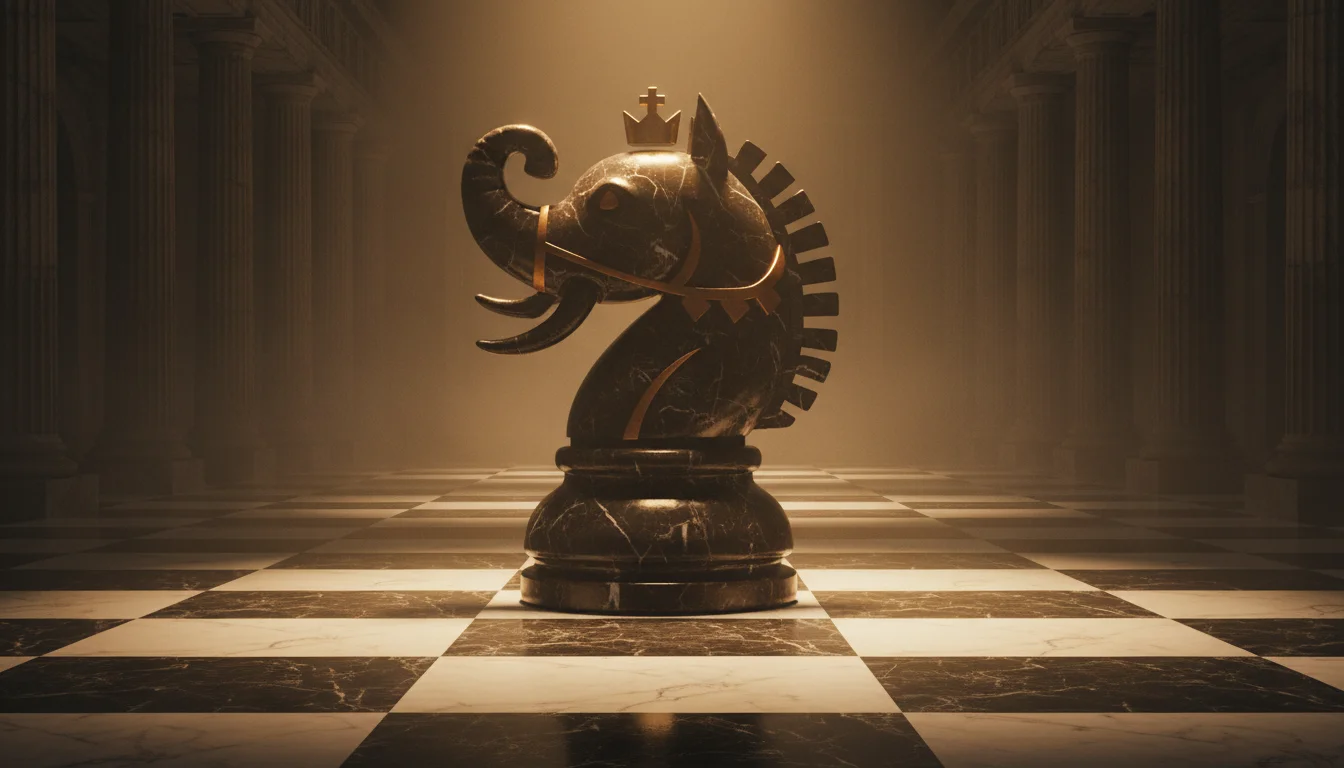
Endgame Mastery in BigChess: When the Clone Rules the Board
Published on bigchessgame.com — Strategy & Analysis
There is a moment in every serious chess game when the noise settles. The opening gambits have been accepted or declined, the middlegame battles have consumed pieces from both sides, and what remains is something quieter, starker, and in many ways more demanding: the endgame. For centuries, the endgame has been considered the purest expression of chess intelligence. It is where calculation must be exact, where a single tempo can decide everything, and where the amateur is finally separated from the master.
In classical chess, endgame study is a discipline unto itself — a vast literature of king-and-pawn studies, rook endgame theory, and bishop-versus-knight debates that has accumulated over five hundred years. Every titled player has spent hundreds of hours memorizing Lucena positions, Philidor defenses, and the triangulation maneuvers that allow a king to lose a tempo without losing ground.
BigChess — the 10×10 chess variant available at bigchessgame.com — inherits all of this classical knowledge and then detonates it with a single revolutionary addition: the Clone piece. An Archbishop in power, combining the bishop's diagonal slide with the knight's L-shaped leap, the Clone transforms endgame theory from a settled science into an open frontier. This article explores that frontier — examining what the endgame is, why it matters, and how BigChess creates entirely new territory that no grandmaster has yet fully mapped.
What the Endgame Really Is — and Why It Demands a Different Mind
Ask any strong player what distinguishes endgame thinking from opening or middlegame thinking, and the answer invariably involves the word precision. In the opening, a mistake costs you a tempo or an ideal square. In the middlegame, a mistake costs you material or a pawn. In the endgame, a single inaccuracy — even a single misplaced move — can transform a winning position into a draw, or a drawn position into a loss. There is no hiding.
This unforgiving precision stems from the mathematical reality of reduced material. With fewer pieces on the board, each remaining piece carries an enormous share of the positional burden. The king, which spent the entire middlegame cowering behind a pawn shield, suddenly becomes a powerful attacking piece. Pawns, which were expendable cannon fodder in the complications, become precious promotion candidates whose advancement must be calculated to the last move.
"Only the player with the initiative has the right to attack." — Wilhelm Steinitz
Steinitz's observation applies nowhere more precisely than in the endgame, where the initiative is often measured not in threats but in tempos — in whether your king reaches a critical square one move before or after your opponent's king does.
The endgame also demands a different kind of visualization. Where middlegame players think in terms of tactical motifs — forks, pins, discovered attacks — endgame players think in terms of geometric principles: opposition, triangulation, the rule of the square, Zugzwang. These are the fundamental laws of endgame physics, and mastering them is what separates the chess amateur from the chess technician.
Classical Endgame Categories: The Pillars of Traditional Theory
King and Pawn Endgames
The foundation of all endgame knowledge begins with K+P endings. Here, the laws of chess are at their most elegant and most merciless. The concept of the opposition — where two kings face each other with an odd number of squares between them — determines who controls key squares and whose pawns will promote. The player who can force the opponent's king into a passive role, and then use the triangulation maneuver to gain a tempo, wins. The player who cannot is left to defend a draw by placing the king in front of the advancing pawn.
Every chess student learns the most fundamental fact of K+P endgames: a king and pawn can force a win only if the king can reach the queening square ahead of the opposing king — or, alternatively, if the king occupies the sixth rank in front of its own pawn (the "key squares" principle). A rook pawn (a-pawn or h-pawn) introduces additional complications, as the defending king can often reach the corner and claim a draw regardless of the pawn's advancement.
These principles seem simple when stated abstractly. In practice, calculating them over-the-board under tournament conditions, with a clock ticking, is a formidable test of nerve and visualization.
Rook Endgames
Rook endgames are famously described as the most common endgame type in practical play, and they are correspondingly the most deeply studied. The Lucena position — where the attacking side has rook and pawn versus rook, with the king in front of the pawn — defines the winning technique involving a "bridge" built by the rook to shield the king from rook checks. The Philidor position defines the defensive technique: the defending rook occupies the third rank to cut off the attacking king, then switches to the back rank when the pawn advances.
Beyond these foundational positions, rook endgame theory encompasses an enormous body of knowledge about active rook placement, the seventh-rank rook, passed pawns, and the principle that rooks belong behind passed pawns. Grandmaster-level rook endgame technique represents hundreds of accumulated years of analysis.
Bishop and Knight Endgames
The eternal debate between bishop and knight in the endgame has produced some of chess literature's most instructive material. The bishop excels in open positions with pawns on both wings, where its long diagonal range can attack on one side while defending on the other. The knight excels in closed positions and in positions where the enemy king is restricted, capable of reaching squares inaccessible to the bishop and delivering tactical blows from unexpected angles.
The famous principle states: a bishop is worth more when pawns are on both sides of the board; a knight is worth more when pawns are on one side. But like all chess principles, this one has exceptions — and the exceptions are where the beauty of chess reveals itself.
The "wrong-colored bishop" problem is perhaps the most famous: a bishop that cannot control the queening square of its own pawn is virtually worthless in the endgame, leaving the game a theoretical draw even with a material advantage. The knight, by contrast, can always reach any square in enough moves — making it more "complete" in some endgame scenarios despite being generally weaker in open positions.
Queen Endgames
Queen endgames are paradoxically among the most difficult to convert, even with a material advantage. The enemy rook or queen delivers perpetual check possibilities that demand enormous precision to navigate. Queen-versus-rook endings require an intricate technique of forcing the rook away from the king through a sequence of checks and zugzwang maneuvers that even strong grandmasters sometimes handle imprecisely. Queen-versus-pawn endings on the seventh rank are famous for their drawing possibilities when the pawn is a bishop or rook pawn.
BigChess Endgames: A New Universe
Now consider what happens when we lift all of this accumulated endgame theory and place it on a 10×10 board with 10 pawns per side, new pawn movement rules, and a piece — the Clone — that no endgame theorist has ever analyzed.
BigChess, created by Ukrainian chess entrepreneur and Candidate Master of Sport Vilen Fatalov, who brings over 40 years of chess experience to the design, introduces changes at every level of the game. But nowhere are those changes felt more profoundly than in the endgame.
Ten Pawns Per Side: The Promotion Highway Congestion
In classical chess, 8 pawns per side create endgame structures that have been analyzed exhaustively. In BigChess, each side begins with 10 pawns on a 10-square-wide board. This means that pawn endgames are dramatically more complex — there are more passed pawn candidates, more potential pawn breaks, and more tension along the full width of the board.
The classical principle that isolated pawns are weak applies with even greater force in BigChess, because there are more opportunities for an isolated pawn to be created and attacked. Conversely, a connected pawn majority on one wing of the 10×10 board can create a passed pawn that races toward promotion while the opponent's forces are tied down elsewhere.
The 10-square board also means that pawn islands — groups of connected pawns separated from other groups — are more numerous and varied. A player might have three distinct pawn islands requiring separate defense, a burden that in classical chess would be considered catastrophically weak but in BigChess is more manageable given the greater total number of pawns.
The Triple Pawn Step: Endgame Echoes of Opening Decisions
One of BigChess's most distinctive rules is the triple pawn step: from its starting rank, a pawn may advance one, two, or three squares. This option — available only from the starting position — has profound endgame consequences that are decided in the opening.
A pawn that advances three squares on move 1 arrives at rank 5 (counting from the player's perspective on the 10×10 board) immediately. By the endgame, this pawn may be a passed pawn candidate at an advanced position, or it may have traded off in the middlegame, leaving a structural weakness. The endgame player must account for the pawn skeleton that was established by triple-step decisions made 30 or 40 moves earlier.
BigChess also introduces extended en passant: when a pawn makes a triple step, the opponent may capture it en passant on any square it passed through — not just the square immediately adjacent as in classical chess. This creates endgame scenarios where a would-be passed pawn can be intercepted by an en passant capture that would be impossible under classical rules, changing the calculation of whether a pawn race is winnable.
Clone vs. Rook: A New Theoretical Territory
Perhaps the most significant contribution BigChess makes to endgame theory is the Clone-versus-Rook endgame. This matchup has no classical equivalent. The Clone — combining the bishop's diagonal slide with the knight's L-jump — is a piece of roughly equivalent value to the rook in most positions, but their endgame interaction creates patterns that must be discovered entirely from first principles.
Consider the fundamental dynamics: the rook is a long-range piece that excels in open positions, controlling files and ranks. Its weakness is that it needs open lines to be active. The Clone, by contrast, combines two types of movement: the diagonal slide (shared with the bishop) and the knight jump (unique to the Clone among BigChess's long-range pieces). The Clone can therefore attack squares that the rook cannot reach directly, and its knight component allows it to hop over intervening pieces.
In endgames with reduced material, the Clone's dual nature creates extraordinary tactical possibilities:
- The Clone Fork: Because the Clone moves both diagonally and in L-jumps, it can threaten two pieces simultaneously in ways that neither the bishop nor the knight could alone. In a simplified endgame, a Clone can fork a rook and a pawn in a configuration that neither piece could individually create.
- The Clone Outpost: A Clone planted on a central outpost square in the endgame — supported by a pawn and immune from attack by the opponent's pieces — exerts influence across diagonals (like a bishop) and can leap to adjacent squares (like a knight). This dual influence makes it far harder to dislodge than a knight occupying a similar outpost.
- Clone Activity in Pawn Endgames: When a Clone enters a K+P endgame, it can guard the promotion square diagonally from a distance while simultaneously threatening to jump into the action with a knight move. The defending side must calculate against both threats simultaneously.
The Clone's Unique Checkmate Ability
Here is a fact with profound endgame implications: a Clone can force checkmate against a bare king by itself, with only the assistance of its own king.
This is not trivially true for the bishop or knight. A bishop and king cannot force checkmate — the bishop controls only one color of squares, and the defending king can always escape to a square of the other color. Two bishops can force checkmate. A bishop and knight can force checkmate, but the technique is notoriously difficult. A single knight and king cannot force checkmate at all.
The Clone, however, controls squares of both colors: its diagonal movement covers squares of one color, while its knight-jump can reach squares of both colors. This means a Clone combined with a king has the theoretical ability to force checkmate. The exact technique is a new area of endgame theory being developed by BigChess players — but the key mechanism is clear: the Clone drives the enemy king to the corner using diagonal pressure, then switches to knight-jump threats to eliminate the defensive square the king would otherwise escape to.
Mastering Clone-versus-bare-king technique is one of the defining endgame skills in BigChess — analogous to learning the Lucena or Philidor positions in classical chess, but entirely new to every player who sits down to learn it.
Clone vs. Bishop: The Asymmetric Battle
Clone-versus-bishop endgames introduce a fascinating asymmetry. Both pieces can move diagonally, creating the illusion of symmetry. But the Clone's knight component gives it a decisive advantage in positions where the bishop is restricted — specifically, where the bishop cannot change the color of squares it controls.
A bishop locked behind its own pawns on the wrong color is a ghost piece. A Clone in the same structural position can leap over the pawns and become immediately active. In Clone-versus-bishop endgames, the player with the Clone should generally seek closed pawn structures that limit the bishop's diagonal range while the Clone's jump ability remains unimpaired.
The critical question in these endgames is whether the Clone's superiority in mobility translates into a concrete winning advantage. The answer depends on pawn structure — specifically, on whether there are enough passed pawn candidates to create winning threats that the bishop cannot simultaneously address.
Clone vs. Knight: The Mirror Match That Isn't
Clone-versus-knight endgames at first appear symmetrical, since both pieces share the L-jump movement. But the Clone's additional diagonal sliding means it can control long diagonals in a way the knight cannot. In endgames, this translates into the Clone being able to create distant threats — attacking a pawn on the far side of the board while defending a pawn on the near side — simultaneously. The knight cannot do this; it can only be in one location.
The strategic principle in Clone-versus-knight endgames is therefore: create threats on both sides of the board simultaneously. Force the knight to choose which threat to address. If the pawn structure supports this strategy, the Clone wins. If the pawns are concentrated on one wing, the knight's jumping ability on that wing may compensate for its lack of range.
Specific Clone Endgame Motifs: A New Vocabulary
Just as classical endgame theory has developed specific named motifs — the bridge, the back-rank restriction, the key squares, the opposition — BigChess endgame analysis is beginning to develop its own vocabulary of Clone-specific techniques.
The Clone Battery
A Clone placed on a long diagonal, supported by a pawn or piece that prevents the enemy king from approaching, creates a "Clone Battery" — a sustained threat along the diagonal combined with the potential to leap to a different attacking angle. Against a king trying to shelter from check, the Clone battery can suddenly shift from diagonal pressure to a knight-jump check that comes from a completely different direction.
The Diagonal Squeeze
In pawn endgames where both sides have a clone, the side that first establishes a Clone on the longest available diagonal has a significant advantage. The Clone controls squares along the diagonal as a bishop would, preventing the opponent's king from crossing the diagonal, while simultaneously threatening L-jumps to either side. This creates a "diagonal squeeze" that confines the opposing king to one section of the board.
The Double Threat Fork
The Clone's ability to move both diagonally and in L-shapes creates a specific type of double threat that has no classical equivalent. A Clone on square X may simultaneously threaten to slide diagonally to attack a piece at square Y, and to jump in an L-shape to attack a piece at square Z. Neither the bishop nor the knight could create this specific double threat. Recognizing these configurations — and creating them deliberately — is a core endgame skill for the BigChess player.
Promotion to Clone
BigChess introduces the ability to promote a pawn to a Clone in addition to the classical options. In endgames where the player already has a queen, promoting to a Clone instead of a second queen may be the winning technique — particularly when the Clone's checkmate threats are more concrete than those of an additional queen. The decision of whether to promote to a queen or a Clone is a uniquely BigChess endgame problem that requires calculation of the resulting mating patterns.
Ten Pawns and the Extended Promotion Path
On the 10×10 board, pawns must travel 9 squares (or 7-8 squares after an initial triple step) to promote. This longer journey gives the defending side more time to establish blockades, but it also means that passed pawns become genuine threats earlier in the game — a pawn that has reached rank 7 on a 10-rank board is already a serious danger, but it still has three ranks to travel.
The endgame calculation of whether a passed pawn can promote before the opponent can stop it — the classical "pawn race" calculation — becomes more complex on the 10×10 board. The "rule of the square" (the geometric shortcut for determining whether a king can catch a passed pawn) must be recalculated for the larger board dimensions. Players accustomed to classical chess must recalibrate their intuition about when a king can intercept a passed pawn and when the race is lost.
The triple step adds another dimension: a pawn that made a triple step from its starting rank can in theory reach the eighth rank (counting from the opponent's perspective) in six moves. This faster-than-classical advancement is a significant factor in endgame races.
The Endgame as BigChess's Greatest Innovation
If the opening in BigChess rewards creative thinking unshackled from memorized theory, and the middlegame rewards tactical imagination involving the Clone's unique movement patterns, then the endgame is where BigChess most profoundly challenges the experienced chess player.
Every endgame motif — every technique, every principle, every rule of thumb — that has been accumulated over five centuries of classical chess must be reexamined in the light of the Clone's existence. Can a Clone force checkmate against a bare king? Yes — the technique is being developed. Does Clone-versus-rook favor the Clone? It depends on the pawn structure. Does Clone-versus-bishop favor the Clone? Usually, in open positions — but not always. These are questions that the BigChess community at bigchessgame.com is actively exploring.
In classical chess, endgame theory is a settled science. In BigChess, endgame theory is a living frontier — a vast territory where every serious player can contribute to the collective knowledge of the game. The endgame is where BigChess reveals its deepest potential as an intellectual challenge.
| Endgame Type | Classical Chess | BigChess |
|---|---|---|
| K + Pawn | Extensively analyzed | Longer promotion path, triple-step echoes |
| Rook Endgames | Lucena/Philidor standard | New vs-Clone scenarios unexplored |
| Bishop Endings | Color-square principles settled | Clone outclasses bishop in mobility |
| Knight Endings | Outpost principles well-known | Clone has range advantage knight lacks |
| Solo checkmate | Bishop alone: impossible | Clone alone: possible (K + Clone) |
Studying BigChess Endgames: Where to Begin
For the player who wants to master BigChess endgames, the recommended approach mirrors classical endgame study — but with an important twist. Begin with the fundamentals that carry over directly: K+P theory, the opposition, and the principle of active king play. These skills transfer from classical chess to BigChess with minimal modification.
Then move to Clone-specific study. The first priority is the Clone-versus-bare-king technique: practice forcing checkmate with king and Clone against a lone king. This exercise will build the intuitive understanding of the Clone's geometric reach that underlies all Clone endgame play.
Next, study Clone-versus-rook endgames experimentally — play them out against an opponent or the BigChess engine and build pattern recognition. These endgames are not yet theoretically settled, which means every game you play adds to your personal knowledge base in a way that studying classical chess endgame theory cannot.
Finally, pay attention to pawn structure. BigChess's 10 pawns per side create endgame structures of greater complexity than classical chess. The player who understands which pawn structures favor the Clone — and which favor the bishop, knight, or rook — will have a decisive edge in converting endgame advantages.
Conclusion: The Endgame Frontier Awaits
The endgame is where chess separates the technically precise from the merely enthusiastic. It is where five centuries of accumulated wisdom are called upon in their most concentrated form. And in BigChess, the endgame is also where an extraordinary opportunity presents itself: to be among the first players to truly master a territory that classical theory has never touched.
The Clone endgame is not just a new piece on the board — it is a new category of chess thinking. Its ability to combine diagonal range with L-jump threats, to force checkmate alone with only the king's assistance, to dominate both closed and open structures, and to create double threats that no classical piece can replicate — all of these qualities make the Clone the defining piece of BigChess endgame theory.
Masters of classical chess endgames will find BigChess a humbling and exhilarating challenge. Their technique transfers partially — but the Clone insists on being understood on its own terms. And that process of understanding, of building a new endgame vocabulary from first principles, is one of the deepest intellectual pleasures BigChess has to offer.
The board is 10×10. The game is deeper than classical chess has ever been. The endgame frontier is open to everyone who dares to explore it.
Ready to test your endgame skills in BigChess? The Clone is waiting — and it doesn't forgive imprecision any more than a rook pawn does. Play BigChess now at bigchessgame.com, available on web, iOS, and Android. Build your ELO rating, solve BigChess puzzles, and review your games in the game history system. The endgame frontier is open — and every game you play helps map it.
About the Author
Rinat Fatalov
Co-inventor of Big Chess
University Student, Co-inventor of Big Chess, First Category chess player.