
The Psychology of Chess: How BigChess Trains a Sharper, More Creative Mind

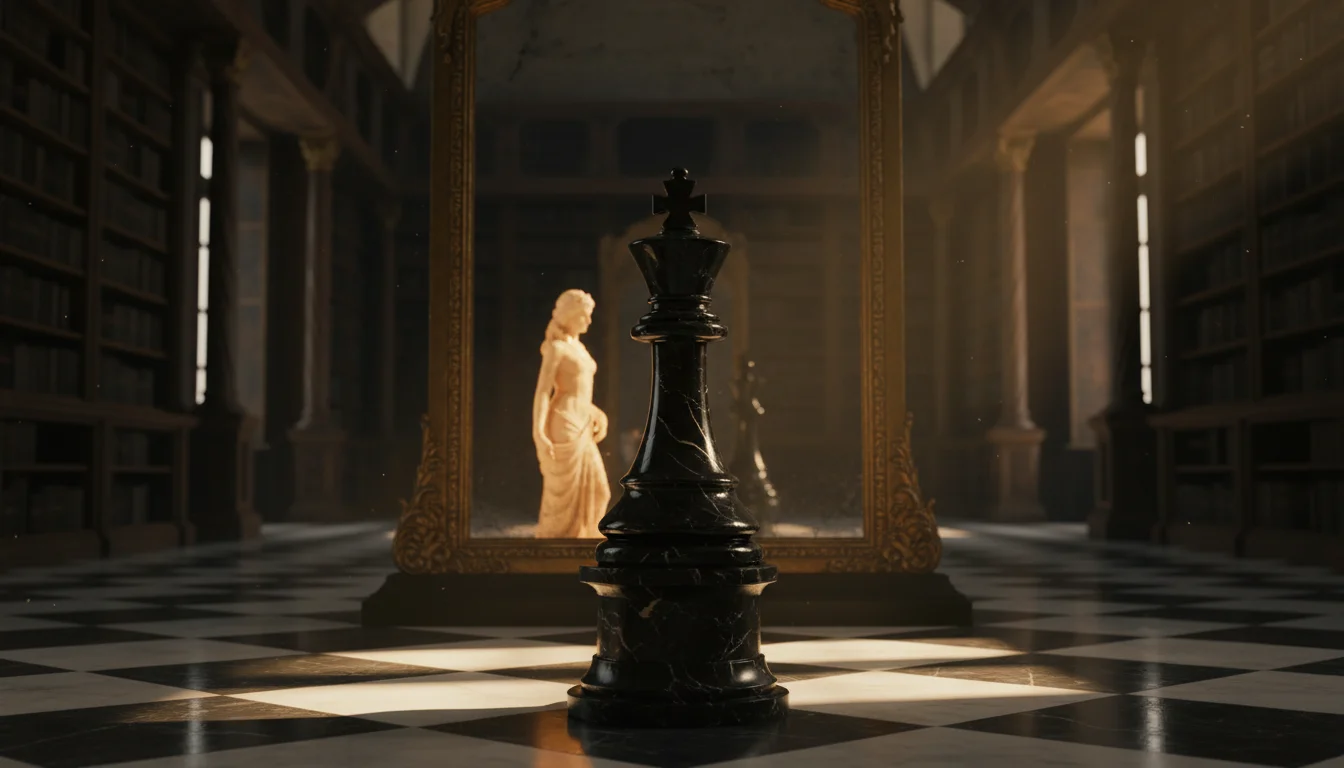
The Psychology of Chess: How BigChess Trains a Sharper, More Creative Mind
Chess has long been celebrated as a game that builds the mind. Neuroscience is now explaining precisely why — and BigChess takes every one of those cognitive demands further.
Introduction: The Board as a Laboratory
When a chess player sits down at the board, something unusual happens in their brain. Multiple cognitive systems engage simultaneously: visual perception, working memory, pattern recognition, forward planning, emotional regulation, and strategic reasoning all fire in coordinated sequence. This confluence of mental demands is unusual even among complex activities. Chess is not merely entertainment. It is, as decades of neuroscience research suggest, one of the most cognitively demanding voluntary activities a human being can engage in.
And yet, for all its richness, classical chess faces a peculiar modern problem. At intermediate and advanced levels, a growing proportion of that cognitive activity is not genuine calculation — it is recall. Memorized opening sequences, catalogued tactical patterns, absorbed endgame theory. The opponent makes a move; the experienced player recognizes the position and retrieves the appropriate response from a library built over years of study. Pattern recognition, yes. But not quite the same as discovering something new.
BigChess changes that equation. By expanding the board to 10×10, introducing the Clone piece — a bishop-knight hybrid with no classical counterpart — and establishing rule modifications that create genuinely new positional structures, BigChess forces players back into the territory of authentic calculation. The pattern library accumulated through years of classical chess study remains partially useful, but it is insufficient. Players must think. Really think.
This article explores what cognitive science knows about chess and mental development, examines the specific psychological demands that make chess a training ground for sharper thinking, and explains why BigChess amplifies every one of those demands in ways that make it an even more powerful cognitive tool.
Part I: What Neuroscience Has Found About Chess Players' Brains
The Two-System Framework
Psychologist Daniel Kahneman's framework of System 1 (fast, intuitive thinking) and System 2 (slow, deliberate reasoning) maps cleanly onto chess cognition. Chess grandmasters rely heavily on System 1 to perceive the character of a position instantly — recognizing threats, evaluating piece activity, sensing the "feel" of a board almost without conscious effort. They then switch to System 2 for detailed calculation of specific variations.
The interplay between these systems is a central theme of chess psychology. A beginner has only System 2 available — laboriously counting piece values, checking whether each move is legal, processing the board through effortful deliberate thought. A grandmaster has developed a robust System 1 chess library, allowing rapid intuitive assessment before System 2 kicks in for deeper analysis.
Research by de Groot (1965) and Chase and Simon (1973) established the foundation of what is now called chunking theory in chess cognition. Their experiments showed that expert chess players do not have better general memory than non-players — they have better memory for meaningful chess positions. When shown a chess board for five seconds, grandmasters can recreate the position with remarkable accuracy. When shown a board with pieces placed randomly (no legal game could produce the arrangement), their advantage disappears. They remember patterns, not individual piece locations.
This chunking ability — perceiving meaningful groups of pieces as single units — is the core cognitive adaptation that chess training builds. And its applications extend well beyond chess: research suggests that chunking improves performance in any domain that involves recognizing meaningful patterns in complex information, from medical diagnosis to financial analysis to software engineering.
Working Memory and Chess
Working memory — the cognitive system that holds information in mind while manipulating it — is heavily loaded by chess calculation. When a player calculates a five-move combination, they must simultaneously hold the starting position in mind, track where pieces have moved in the imagined sequence, assess the resulting position, and evaluate multiple alternative variations at each step. This is among the most demanding tasks that working memory performs in any daily activity.
Studies have consistently found that stronger chess players have higher functional working memory capacity when measured in chess-relevant tasks. More significantly, research suggests that chess training builds working memory capacity over time — particularly in younger players. A 2019 meta-analysis published in Educational Psychology Review found statistically significant improvements in working memory and executive function among children who participated in structured chess training programs.
The mechanism is straightforward: chess repeatedly demands the extreme end of working memory performance. Like any other exercise, working a cognitive system intensively at its limits leads to adaptation. The brain, confronted repeatedly with the necessity of holding ten-move variations in mind while evaluating positions, gradually develops greater capacity to do so.
Executive Function: Planning, Inhibition, and Flexibility
Executive function is the umbrella term for the higher-order cognitive processes that allow humans to plan, organize, and regulate their behavior. Three components of executive function are especially relevant to chess:
- Planning: The ability to select a sequence of actions aimed at a future goal. Chess demands planning at every move — not just "what is my next move?" but "what is my plan for the next five to ten moves, and what positions am I trying to reach?"
- Inhibitory control: The ability to suppress dominant but inappropriate responses in favor of correct but less obvious ones. In chess, this means resisting the temptation to make an appealing-looking move without verifying that it actually works. The chess axiom "candidate moves first" is literally an inhibitory control exercise.
- Cognitive flexibility: The ability to shift mental frameworks when the situation demands it. A player who develops a plan and then rigidly pursues it despite new information is a player who loses material. Flexibility — recognizing when your plan is wrong and switching to a different approach without emotional resistance — is essential.
Research published in Frontiers in Psychology (2016) found that chess players demonstrate significantly better performance on executive function measures compared to non-players, and that this advantage is most pronounced in the planning domain — precisely what you would predict given that planning is chess's central cognitive demand.
Brain Imaging Studies
Functional MRI studies of chess players reveal an interesting distribution of neural activity during gameplay. Experienced players show strong activation in visuospatial processing regions — the brain areas responsible for perceiving and manipulating spatial information — which is expected. More interesting is the finding that expert players show greater activation in the caudate nucleus, a structure associated with proceduralized, pattern-based recognition, compared to novice players who rely more heavily on frontal lobe (explicit reasoning) regions.
This parallels the Kahneman framework: experts have successfully transferred chess knowledge from slow, effortful frontal processing to faster, automatic pattern-recognition systems. The chess-playing brain of an expert literally looks different from the chess-playing brain of a beginner, in ways that reflect the architecture of expertise built through years of study and practice.
Part II: The Psychological Landscape Inside a Chess Game
Decision-Making Under Pressure
Chess creates a distinctive psychological environment for decision-making: decisions must be made under time pressure, with incomplete information about the opponent's plans, with real consequences (the game outcome), and without the possibility of taking back a choice once made. This combination of features makes chess an unusually realistic simulator for the kinds of decisions that matter in real life.
The pressure element is particularly important. In time-controlled chess, a player who spends too long on any single move will run short of time later in the game, often leading to mistakes that would not occur in a slower context. This forces players to develop a decision-making process that is efficient as well as accurate — to know when a position requires deep calculation and when intuitive assessment is sufficient.
Research on decision-making under time pressure in chess shows that expert players make qualitatively better rapid decisions than novices, not just quantitatively faster ones. This suggests that chess expertise doesn't just accelerate the same decision process — it changes the quality of rapid decisions by building more reliable intuitive systems. The expert is better in the clutch not because they are calmer but because their fast-thinking system has been trained to higher accuracy.
Pattern Recognition as a Double-Edged Sword
Pattern recognition is chess's greatest cognitive gift and its subtlest trap. The grandmaster who instantly sees a queen sacrifice because the position resembles a Tal combination from fifty years ago is using pattern recognition productively. The club player who misses a simple defensive move because they are focused on patterns they expect to see — failing to see what is actually there — is falling into a pattern recognition failure.
Cognitive scientists call this einstellung, from the German word for "set" or "attitude" — the tendency to apply a familiar solution pattern to a new problem even when the familiar pattern is wrong. Chess studies show that even grandmasters experience einstellung: they can miss simple solutions because a complex familiar pattern has "primed" their search process in the wrong direction.
Awareness of einstellung is itself a psychological skill that chess develops. The player who learns to notice when they are solving the problem in front of them versus the problem they expect to be in front of them is developing a metacognitive capacity that transfers powerfully to any domain where pattern-matching can mislead as well as illuminate.
Emotional Regulation: Not Tilting After a Blunder
Every chess player has experienced tilt — the emotional cascade that follows a blunder. You miscalculate, lose material, and suddenly the game feels hopeless. The immediate emotional response is often a mixture of frustration, shame, and discouragement. The psychological challenge is not to let that emotional state degrade the quality of subsequent play.
Tilting is empirically real and measurable. Studies of online chess data have found that players who lose a game immediately before playing another game perform significantly worse than their baseline, even controlling for opponent strength. The negative emotional state after a loss demonstrably impairs subsequent performance. The effect is larger for blunders mid-game — sudden material losses — than for narrow defeats in well-played games.
The psychological skill of recovering from a blunder mid-game — not giving up, not playing recklessly to "punish" the opponent for one's own mistake, but recalibrating calmly and finding the best continuation — is one of chess's most practically valuable lessons. It is also one of the most difficult. Magnus Carlsen, arguably the greatest chess player in history, has won games from positions that were objectively lost partly because of his psychological resilience: the refusal to play carelessly just because the position is bad.
This resilience under adversity — the willingness to continue performing well after a setback — is a mental skill with obvious applications far beyond chess. The player who can shake off a blunder and find the best defensive resource is developing the same psychological capacity that allows professionals to perform well after a mistake at work, athletes to recover after a missed shot, and leaders to respond constructively to a project failure.
The Dunning-Kruger Curve in Chess Improvement
Chess has a well-documented version of the Dunning-Kruger effect — the cognitive bias whereby people with limited knowledge in a domain overestimate their competence, while genuine experts tend toward greater epistemic humility. In chess, this manifests as a characteristic pattern of improvement:
- Beginner stage: The new player learns basic rules and wins against other complete beginners. They feel relatively competent.
- Intermediate crisis: As they encounter stronger players and begin studying seriously, they discover how much they don't know. Progress seems to stall. Many players quit at this stage.
- Gradual ascent: Players who persist begin developing reliable pattern recognition and calculation ability. Their ELO rating climbs steadily.
- Advanced plateau: Strong players discover that improvement becomes exponentially harder. The difference between 1800 and 2000 ELO requires less work than the difference between 2000 and 2200.
- Expert humility: Strong players paradoxically become more aware of the vast territories of chess they don't understand. The more they know, the more precisely they can identify what remains unknown.
This curve is not just a curiosity about chess psychology. It is a model for skill acquisition in any complex domain. The intermediate crisis — where growing knowledge reveals incompetence previously invisible — is the point where many learners abandon difficult pursuits. Chess players who navigate it successfully develop a relationship with difficulty and uncertainty that serves them across all areas of intellectual and professional life.
Part III: Planning Horizons — How Far Can You See?
The Depth of Calculation
Chess calculation — the ability to follow a sequence of moves mentally without moving the pieces — is what separates good players from great ones more than almost any other single skill. A typical club player can reliably calculate three to four moves ahead in complex tactical positions. A grandmaster can calculate reliably six to ten moves ahead, with selective deeper calculation in critical variations reaching fifteen moves or more.
The cognitive demands of deep calculation are enormous. Each additional ply (half-move) in a calculation tree multiplies the number of positions that must be evaluated. At branching factor five (roughly the average number of candidate moves in a tactical position), three moves deep means 125 positions; six moves deep means 15,625. No human — and no computer before sophisticated pruning algorithms — can evaluate this tree exhaustively. Instead, strong players develop selective search: the ability to identify which branches of the calculation tree require deep evaluation and which can be pruned quickly.
This selective search ability is itself a profound cognitive skill. It requires accurate intuitive assessment to know which positions are worth examining carefully and which are clearly bad. It requires the discipline to verify promising moves rather than assuming they work. And it requires the intellectual courage to calculate genuinely difficult positions rather than retreating to moves that feel safe but may be suboptimal.
Short-Term and Long-Term Planning
Chess requires simultaneous operation at multiple planning horizons. At the tactical level, a player plans specific move sequences two to fifteen moves deep. At the strategic level, a player develops plans involving piece repositioning, pawn structure transformation, or king safety improvement that may take twenty or thirty moves to execute. At the game level, a player must manage the transition between phases — from opening to middlegame, from middlegame to endgame — with a continuous awareness of how present decisions affect future options.
Holding all three horizons in mind simultaneously, and coordinating actions across them, is the distinctive challenge of chess strategy. Players who plan only tactically win short-term material but lose strategic ground. Players who plan only strategically miss tactical shots that undermine their positional achievements. The synthesis of tactical and strategic thinking into a unified decision process is the hallmark of the complete chess player.
Part IV: BigChess — Every Cognitive Demand, Amplified
More Variables, More Complexity
Classical chess is played on 64 squares with 32 pieces starting positions. BigChess is played on 100 squares with 40 starting pieces, including four Clone pieces whose movement patterns have no classical precedent. The combinatorial expansion of the game space from 8×8 to 10×10 is enormous.
At the working memory level, this means more squares to track, more pieces to account for, more potential moves to consider. The cognitive load of a BigChess position is measurably greater than a comparable classical chess position. Players who have developed working memory capacity through classical chess will find BigChess tests it further. Players learning BigChess from scratch are building working memory capacity in an even more demanding environment.
At the pattern recognition level, BigChess forces players to construct their pattern libraries from genuine observation rather than cultural inheritance. The vast canon of classical chess patterns — bishop sacrifices on h7, back-rank mates, smothered mate motifs — provides no equivalent preparation for Clone tactics. Every BigChess pattern must be learned fresh. This is cognitively demanding in the best possible way: forced novelty prevents the pattern library from substituting for genuine calculation.
The Clone Forces Creative Thinking
Perhaps the most significant psychological effect of the Clone piece is this: it makes the board less predictable in ways that specifically require creative rather than reproductive thinking.
Reproductive thinking — applying known solutions to recognized problems — is sufficient for most chess at the club level. The positions look familiar enough that the player can ask "what should I do in this type of position?" and retrieve a useful answer. The Clone short-circuits this process. A Clone fork — combining diagonal threat and knight-jump threat simultaneously — doesn't resemble any classical chess tactical pattern closely enough for a reproductive answer to be reliable. The player must calculate creatively: what does this specific position offer? What threats can I create that my opponent hasn't seen?
This enforced creativity is psychologically valuable. The neuroscience of creativity consistently shows that novel problem environments — situations that don't match existing solution templates — generate stronger activation in the brain's default mode network, associated with imagination and insight. BigChess, by regularly placing players in positions with no classical equivalent, regularly triggers the creative thinking that classical chess increasingly displaces with pattern recall.
No Established Theory: Genuine Exploration
One of the less-discussed psychological costs of classical chess at intermediate and advanced levels is the experience of playing a memorized opening for twenty moves only to find oneself with no idea how to continue — the theory has run out, and the player must suddenly shift from reproductive recall to genuine thinking. The transition is often jarring. Many players develop anxiety about "leaving the book" that inhibits their creative thinking precisely when it is most needed.
BigChess has no established opening theory to speak of. Every game begins in genuinely unexplored territory. The player cannot rely on memorization because there is little to memorize. They must think from move one. This forces the development of a relationship with uncertainty that is fundamentally healthier and more cognitively productive than the classical chess relationship with opening theory.
Research on learning in novel environments consistently shows that struggle during learning — the experience of not having a ready answer and having to construct one — produces stronger long-term retention and more flexible knowledge than smooth recall of memorized solutions. BigChess structurally guarantees productive struggle by removing the possibility of smooth memorization. Players trained on BigChess develop thinking habits that serve them better in the long run.
Longer Boards, Longer Plans
The 10×10 board extends planning horizons compared to classical chess. Pieces take more moves to reach their optimal positions. Pawn advances take longer to become critical. The transition from opening to middlegame is stretched, giving players more time to develop plans and more positions to evaluate in the process.
This extended planning requirement builds exactly the long-term planning capacity that chess research has identified as one of the game's most transferable cognitive benefits. Players who learn to plan effectively across a 10×10 board are engaging the same planning circuitry — but more intensively and over a longer time horizon — than classical chess players. The cognitive training return is proportionally greater.
Emotional Demands: The Clone Creates New Opportunities for Tilt
The Clone's tactical complexity creates specific emotional regulation challenges that classical chess does not. Losing material to a Clone combination that you didn't see — especially if the combination involved a mode-switch from diagonal to knight-jump that you failed to anticipate — produces a distinctive psychological shock. The tactic was genuinely invisible in a way that a standard knight fork usually isn't.
Recovering from this type of surprise — recalibrating your threat evaluation to account for dual-mode Clone threats, continuing to play well despite having been caught off guard — is a demanding emotional regulation task. Players who develop the capacity to do this in BigChess are training a form of psychological resilience that goes beyond what classical chess typically requires, because BigChess creates more genuine surprise and more frequent encounters with genuinely unfamiliar threats.
Part V: Chess Across the Lifespan — What the Research Shows
Chess and Children's Development
The evidence for chess's educational benefits in children is among the strongest in any domain. A 2016 study by researchers at the University of Memphis found significant improvements in mathematical problem-solving ability in children who received chess instruction. A large-scale study of over 4,000 schoolchildren in Italy found that chess instruction produced measurable improvements in mathematics and attention scores. Multiple randomized controlled trials have found positive effects on planning ability, inhibitory control, and cognitive flexibility in children who participate in structured chess programs.
The mechanism appears to be specifically the chess thinking process — the habit of considering multiple possibilities, anticipating consequences, and verifying moves before committing — rather than chess knowledge per se. Children who learn to think like chess players in the context of chess games appear to transfer this thinking approach to other cognitive tasks.
BigChess introduces these same cognitive benefits while adding the Clone's creative demands. For children learning their first strategy game, BigChess may offer even stronger cognitive development returns than classical chess, precisely because it provides no rote memorization shortcut and requires genuine creative calculation from the start.
Chess and Cognitive Reserve in Adults
A 2020 study published in The New England Journal of Medicine found that engaging in mentally stimulating leisure activities — including chess — was associated with a significantly reduced risk of cognitive decline and dementia in older adults. The protective effect persisted even after controlling for education level, social activity, and other confounding factors.
The hypothesis behind this finding is cognitive reserve: the brain's resilience against age-related deterioration, built by a lifetime of cognitive challenge. Activities that repeatedly tax the brain's planning, memory, and reasoning systems build neural networks that provide a buffer against neurodegenerative processes. Chess, as a demanding cognitive activity, appears to contribute to this reserve.
BigChess, by maintaining its complexity advantage over classical chess throughout the lifespan, offers a game that continues to challenge players whose classical chess skill has become partially automated. An expert classical chess player whose opening knowledge is largely memorized and whose tactical patterns are deeply routinized may derive less cognitive benefit from a game that has partly become a test of recall. BigChess, where novelty is structurally guaranteed, maintains its cognitive demand at any level of expertise.
Conclusion: BigChess as a Cognitive Training Tool
The case for chess as a cognitive training tool is strong and well-supported by neuroscience. The case for BigChess as an even more potent cognitive training tool follows directly from the structure of the game.
Classical chess has the following cognitive profile: high demand for pattern recognition and working memory, moderate to high demand for creative planning, and decreasing demand for genuine calculation as expertise increases (replaced by recall). BigChess shifts that profile: equally high demand for pattern recognition, equal working memory demand plus the additional load of the 10×10 board, consistently high demand for creative planning at all levels of expertise, and consistently high demand for genuine calculation because the Clone eliminates the possibility of fully reliable pattern recall.
For children, BigChess builds the same planning, working memory, and executive function capacities that classical chess is proven to develop — in a more demanding environment that offers no easy shortcuts. For adults seeking cognitive challenge and the pleasures of a genuinely deep strategy game, BigChess provides a game whose complexity grows with the player rather than gradually depleting into routine. For older adults maintaining cognitive reserve, BigChess offers a challenging activity that never becomes fully familiar.
And for any player who simply loves chess and wants to experience again what it felt like to face a position with no ready answer and genuinely think their way through it — BigChess delivers that experience every game.
Challenge your mind at its fullest. Play BigChess at bigchessgame.com — available on iOS, Android, and web browser. The 10×10 board, the Clone, and the most cognitively demanding chess experience available are waiting for you.
About the Author
Marat Fatalov
Co-inventor of Big Chess
High School Student, Co-inventor of Big Chess, Second Category chess player.