
The Clone's Tactical Arsenal: A Complete Guide to BigChess's Most Powerful Piece

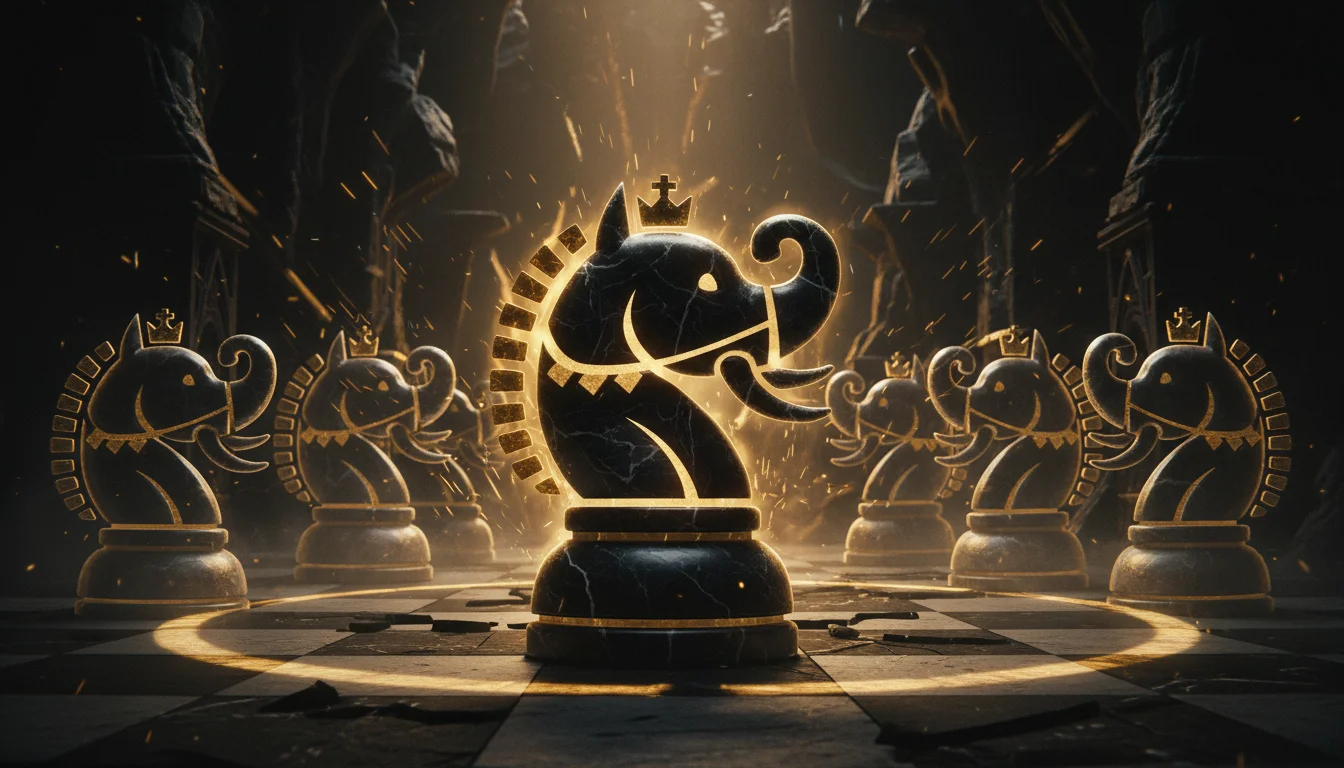
The Clone's Tactical Arsenal: A Complete Guide to BigChess's Most Powerful Piece
Fifteen centuries of chess produced four fundamental piece types. BigChess adds a fifth — and it changes everything you thought you knew about tactical calculation.
Introduction: When Two Pieces Become One
Every experienced chess player has built a mental taxonomy of pieces. Bishops sweep diagonals in long, elegant lines. Knights hop in their peculiar L-shapes, immune to obstruction, beloved for their ability to arrive from unexpected angles. Rooks dominate open files and power through endgames. Queens combine the rook and bishop into an instrument of almost unrestricted force.
And then there is the Clone.
The Clone — BigChess's defining piece — combines the bishop's diagonal slide with the knight's L-shaped jump into a single unit. It can glide across a long diagonal from one side of the 10×10 board to the other, and in the same turn could have instead leaped in any of up to eight knight-jump directions, ignoring everything in its path. It covers both color complexes. It can deliver checkmate alone against a bare king. It attacks up to fourteen squares simultaneously from a central square.
Understanding the Clone tactically is the most important skill in BigChess. This guide covers how it moves, why it is nearly impossible to neutralize by conventional means, and the key tactical and strategic patterns that define play with and against it across every phase of the game.
Part I: Anatomy of the Clone's Movement
The Two Movement Modes
The Clone has exactly two movement modes, and a player must understand both simultaneously at all times:
- Diagonal slide (Bishop mode): The Clone moves any number of squares along a diagonal line. Like a bishop, it cannot jump over pieces blocking its path. A bishop on c3 blocked by a pawn on e5 cannot reach f6; the same applies to the Clone in its bishop mode. The range can be enormous on a 10×10 board — a Clone on a1 has an unobstructed diagonal reaching all the way to j10.
- Knight jump (Knight mode): The Clone moves exactly two squares in one orthogonal direction and then one square perpendicular — or one square then two squares perpendicular. Crucially, it ignores all pieces between its starting square and landing square. Nothing can block a knight jump. This is the defining characteristic that makes the Clone so dangerous.
The key insight is that a Clone sitting behind a wall of its own pawns is not a passive piece. Its knight jumps allow it to strike forward over that pawn wall at any moment. An opponent who thinks a densely packed position makes the Clone temporarily harmless is making a potentially fatal error.
The Coverage Map
Consider a Clone placed on the central square e5 of a 10×10 board, with no other pieces in the way. It attacks the following squares by bishop mode: d4, c3, b2, a1, f6, g7, h8, i9, j10 (one diagonal), d6, c7, b8, a9 (another diagonal), f4, g3, h2, i1 (another diagonal), f6 already counted, e-file diagonals covered. By knight mode from e5: d3, c4, c6, d7, f7, g6, g4, f3 — and two more squares for each direction extending to 2+1 geometry.
In total, from a central square on a clear 10×10 board, a Clone can control or move to an extraordinary number of squares — frequently more than a queen controls from the same position, because the queen has no jump ability and requires open lines for all its moves.
Color Independence: The Bishop's Fatal Flaw, Solved
Every intermediate chess player knows the bishop's fundamental limitation: it is permanently bound to one color. A bishop starting on a light square will never touch a dark square. This creates enduring blind spots and means that in the endgame, a bishop is often worth significantly less than a knight if the critical squares happen to be the wrong color.
The Clone inherits the bishop's diagonal range but not its color limitation. Because its knight jumps allow it to land on either color, the Clone is a color-independent piece. It can begin a game on a light square and attack a dark-square weakness on the next move. It can reposition itself to any color complex without needing to travel across the board first.
This makes the Clone immune to the most common method of neutralizing a bishop — placing pawns and pieces on the opposite color to create a bishop with nothing to attack. Against the Clone, there is no "wrong color." Every square is potentially under threat.
Part II: The Clone Compared to Classical Pieces
Clone vs. Bishop: Range With a Safety Net
The bishop is a specialist. It excels in open positions, where its long diagonals reach across the board. In closed positions, a bishop hemmed in by its own pawns is sometimes called a "tall pawn" — nominally more powerful than a pawn, but practically little better. The bishop is entirely dependent on open diagonal roads.
The Clone, by contrast, never loses its mobility. When every diagonal is blocked, the knight jump is still available. When a closed pawn structure makes the diagonals useless, the Clone simply switches mode and leaps over the structure. This resilience across position types is one of the Clone's most practically significant advantages. Where a bishop degrades in value as the position closes, the Clone's value remains high regardless of pawn structure.
Clone vs. Knight: Range Versus Jump
The knight's power comes from its unpredictability and its jumping ability. In the middlegame, a knight on a powerful central outpost — a square that cannot be attacked by enemy pawns and that the opponent cannot easily challenge — is a fearsome piece. Knights are masters of closed positions and tactical complications.
However, the knight is a short-range piece. A knight on a1 takes at minimum two moves to reach e5. In endgames, knights are notoriously slow to traverse large distances. On the 10×10 board, this limitation is even more pronounced — the board is simply larger, and a knight on the wrong side of the board can be irrelevant to the action for many moves.
The Clone combines the knight's jump with bishop-range travel speed. It is never stranded on the wrong side of the board in the way a knight can be. It can relocate quickly along diagonals, then execute a knight jump at the destination. This combination of speed and explosive close-range capability makes the Clone fundamentally different from either of its component pieces.
Clone vs. Queen: The Secondary Powerhouse
The queen in standard chess is valued at approximately nine pawns — the most valuable piece after the king. In BigChess, the Clone is generally valued at around eight pawns, placing it just below the queen but well above any other piece. A rook (five pawns) and a minor piece (three pawns) together still fall short of the Clone's value.
What separates the queen from the Clone is the queen's orthogonal movement — the ability to move along ranks and files — which the Clone lacks. Queens dominate open files, control ranks, deliver back-rank threats, and perform the core attacking functions that rooks also provide. The Clone has no file-rank movement.
What the Clone offers that the queen does not: the knight jump. A queen can be physically blocked by interposing pieces on diagonals and orthogonals. The Clone's knight jump cannot be blocked. In a congested position where the queen's lines are obstructed, the Clone may actually be the more dangerous attacking piece, because at least half its movement type is immune to obstruction entirely.
Part III: Core Tactical Patterns of the Clone
The Clone Fork: Diagonal Threat Plus Knight Jump
The most fundamental Clone tactical pattern is the fork that exploits both movement modes simultaneously. Consider a Clone that can, from its current square, threaten an enemy piece along a diagonal — and also threaten a different enemy piece via a knight jump. The opponent cannot block both threats with a single defensive move. They must either lose material or invest multiple defensive moves to address both simultaneously.
This is categorically different from a classical knight fork. When a knight forks two pieces, both threatened squares are knight-distance away. An experienced player knows to watch for knight-fork squares and can often anticipate the tactic. The Clone fork is harder to see because the two threats operate along completely different geometries — one diagonal, one L-shaped. A player scanning for diagonal threats will miss the knight component; a player scanning for knight jumps will miss the diagonal component. Only a player thinking about both simultaneously will see the combination ahead of time.
The Clone fork is the signature tactic of BigChess — a threat pattern that is structurally impossible in classical chess and requires genuine recalibration of a player's tactical vision.
Setting up Clone forks involves positioning the Clone on squares from which it can simultaneously eyeball diagonal targets and knight-jump targets. Central squares are ideal for this, as the Clone's coverage is maximized away from the edges. A Clone on the fifth or sixth rank near the center of a 10×10 board can frequently reach pieces on both wings simultaneously, creating threats that span the entire board.
The Clone Outpost
In classical chess, a knight outpost is a square that cannot be attacked by enemy pawns, where a knight can sit indefinitely without being chased away. A knight on a stable outpost deep in enemy territory is one of the most powerful positional weapons in the classical game.
The Clone outpost operates on the same principle but with dramatically expanded threat radius. A knight on an outpost controls at most eight squares. A Clone on an outpost controls those same eight knight-jump squares plus potentially a dozen or more diagonal squares, depending on how many diagonals are open.
Establishing a Clone outpost is a major strategic goal in BigChess. Because the Clone is worth approximately eight pawns, an opponent who can challenge it will often invest significant resources to do so — trading away minor pieces or advancing pawns in ways that create weaknesses. The player with the Clone outpost can often leverage this defensive effort to open other files or create secondary threats elsewhere on the board.
A stable Clone outpost on the opponent's fifth or sixth rank is frequently a decisive positional advantage. If the opponent cannot exchange it off, they may find themselves essentially playing with a permanently inferior position — all pieces subordinated to the task of containing a piece that cannot be fully contained.
The Clone Pin
Classical chess has two types of pins: the absolute pin (a piece cannot move because doing so would expose the king to check) and the relative pin (a piece could legally move but doing so would lose material behind it). Both involve a long-range piece creating a line of pressure through a less valuable piece to a more valuable target behind it.
The Clone pin extends this concept. A Clone can pin via its bishop movement — a long diagonal pin like a bishop. This is straightforward. What makes Clone pins more complex is the possibility of a shadow pin: the Clone threatens along a diagonal, making a piece reluctant to move from its square not because the Clone will capture it (the path may be blocked by other pieces) but because moving it would expose a different piece to a Clone knight jump that the moving piece was inadvertently blocking.
This type of restrictive pressure — where pieces feel constrained by the Clone's presence even when the Clone cannot directly capture them immediately — is a positional concept unique to BigChess. Experienced Clone players learn to create positions where enemy pieces are paralyzed by the simultaneous threat of diagonal slides and knight jumps, even when neither threat is immediately executable.
The Clone Battery
BigChess features two Clones per side. This creates the possibility of a Clone battery — two Clones coordinating their diagonal pressure and knight-jump threats simultaneously. The tactical power of a Clone battery is difficult to overstate.
Two Clones controlling overlapping diagonal networks and supporting each other's knight jumps create a web of threats that is extremely difficult to navigate defensively. A piece that moves away from one Clone threat may walk into another. An exchange that removes one Clone may leave the board so open that the surviving Clone becomes even more powerful.
Coordinating both Clones effectively is one of the higher-level skills in BigChess. Many players focus on activating one Clone strongly and treating the second as a secondary or defensive piece. The strongest BigChess players treat both Clones as equally important resources from the first move, coordinating their development to maximize mutual coverage and threat generation.
The Clone Mating Net
The Clone can deliver checkmate entirely on its own against a bare king — a property shared with the queen and, in principle, the amazon, but not with the rook, bishop, or knight individually. This means Clone versus lone king is a won endgame, and threats to achieve this configuration are always serious.
In practical play, Clone mating nets often arrive from unexpected angles because the knight jump component creates threats that don't require a cleared diagonal. A Clone on the opposite side of the board from the enemy king can suddenly deliver a check via knight jump that no defender was watching, and the follow-up diagonal check can then force mate in few moves.
When your opponent has a lone Clone and limited material, treating the Clone-versus-king ending as automatically technical is an error. The Clone is faster and more flexible than it looks when kings are being hunted, and many games have been lost by players who thought they had neutralized the Clone only to find its knight jump arriving from an unexpected direction.
Part IV: The Clone in the Opening
Principles of Clone Development
The core opening principles of chess — control the center, develop pieces, ensure king safety — all apply in BigChess. But the Clone adds specific considerations that classical chess players must learn to incorporate:
- Develop Clones toward the center early. A Clone on its starting square (c1 or h1 for White) has limited scope, especially with pawns and pieces blocking its diagonals. Getting the Clone to an active diagonal by move five or six is a reasonable opening objective.
- Avoid blocking your own Clone's diagonals with your own pawns unnecessarily. This sounds obvious, but classical chess training creates habits around pawn moves that don't account for Clone diagonals. Moving a pawn that blocks a Clone's most active diagonal before that diagonal has been properly established is a common beginner error in BigChess.
- Consider the triple pawn step in relation to Clone development. The option to advance a central pawn three squares on the first move creates dramatically different pawn structures than in classical chess. Used well, this can quickly open central diagonals for Clone activation. Used poorly, it can leave advanced pawns exposed and create structural weaknesses that a well-placed enemy Clone can exploit.
- Do not trade your Clone lightly for a bishop or knight. The Clone is worth approximately twice a bishop or knight. Trading it away early without adequate compensation is equivalent to giving up a small advantage permanently. Beginners often exchange Clones carelessly because they are not yet calibrated to the piece's value.
Early Clone Activation Patterns
The most direct opening approach for the Clone is to advance a central pawn first — whether one, two, or three squares depending on your pawn structure goals — and then develop the Clone along the opened diagonal. A Clone that reaches d4, e4, f4, e5, or f5 in the first several moves is generally well-placed.
Alternatively, some BigChess players prefer a slower approach: develop the traditional pieces first, castle, and only then activate the Clones into a prepared position. This reduces the risk of an early Clone being exchanged before the game's structures have been established. The downside is that late Clone development cedes the initiative to an opponent who activates their Clone aggressively.
The right approach depends on position and style. Aggressive players who prefer tactical complications will want to activate Clones early and create immediate threats. Positional players who prefer to build slowly and carefully may prefer to develop Clones into a pre-established framework.
Part V: The Clone in the Middlegame
Attacking With the Clone
The Clone is an exceptional attacking piece precisely because its knight jump component cannot be defended against by interposing pieces. A classic defensive resource in chess — blocking a long-range threat by placing a piece in the line of attack — works against the Clone's bishop mode but is completely irrelevant against the knight jump mode.
When attacking with the Clone, experienced BigChess players learn to combine both threat types in a sequence: threaten along a diagonal to force a defensive response, and then execute a knight jump that the defensive response inadvertently opened. This requires looking several moves ahead and anticipating how the opponent's defensive options relate to both modes of Clone movement simultaneously.
Clone attacks against a castled king are particularly dangerous. The standard defensive formation — a castled king with three pawns in front — is designed against rook and bishop threats. It is less robust against the Clone, which can threaten both over the pawn structure via knight jump and through gaps in the pawn structure via diagonal. Experienced BigChess players learn to reinforce king safety specifically against Clone threats, not just against the classical rook-and-bishop attack patterns.
Defending Against the Clone
Defending against an active Clone is one of the most challenging aspects of BigChess. Classical defensive principles help only partially. The following guidelines apply:
- Challenge the Clone's outpost early. If the opponent's Clone has reached a stable outpost, the longer you wait to challenge it, the more entrenched it becomes. Even if challenging it costs material, the positional damage of leaving an active Clone on a strong square may be worse.
- Keep your pieces on squares the Clone cannot reach. Before making any move, check: does this leave any of my pieces on a square the Clone attacks via diagonal or via knight jump? This double-checking process is initially slow but becomes instinctive with practice.
- Use your own Clones as blockers strategically. A Clone blocking an enemy Clone's diagonal effectively neutralizes that threat direction. Clone-versus-Clone exchanges are complex — the player who gives up their Clone for the opponent's Clone in a favorable position may gain other advantages, but must calculate carefully because both pieces are worth eight pawns.
- Reduce open diagonals in your half of the board. A closed pawn structure does limit the Clone's bishop mode, even if it doesn't limit the knight mode. A mix of diagonal-closure and careful piece placement is the most robust defensive approach against an active Clone.
Clone-Based Sacrifices
The Clone's high value means that Clone sacrifices — deliberately giving up the Clone for positional or tactical compensation — are spectacular and occasionally correct plays. A Clone sacrifice that opens files for rooks, destroys the enemy king's pawn cover, or removes a critical defensive piece can be worth far more than the material lost.
Clone sacrifice tactics are still being discovered in the BigChess community. Because the Clone is a new piece with no established tactical literature, combinations involving Clone sacrifices are genuinely novel — unlike classical queen sacrifices, which have centuries of precedent. Players who develop an intuition for when a Clone sacrifice is correct will have a significant advantage over opponents who are still calculating everything from scratch.
Part VI: The Clone in the Endgame
Clone vs. Rook
Clone versus Rook is one of the most complex endgame matchups in BigChess. In classical chess, Bishop versus Rook is generally a draw with best play, and Knight versus Rook is also roughly drawn with correct technique. The Clone is significantly stronger than either, sitting at approximately eight pawns versus the rook's five.
In Clone versus Rook endings, the Clone's knight jump gives it a key advantage: it can reach squares that the Rook's linear movement cannot quickly access, and it can create threats that require multiple rook moves to address. The Clone's ability to check via knight jump from unexpected directions makes the defending king's task particularly difficult.
However, the Rook retains structural advantages: it can cut off a king along ranks and files in ways the Clone cannot, and on an open board it can generate checking sequences that the Clone struggles to escape. The endgame is generally winning for the Clone with good technique, but it requires precise calculation rather than automatic conversion.
Clone vs. Queen
Queen versus Clone is a theoretically interesting endgame that occasionally arises when other material has been exchanged off. The queen's approximate value of nine pawns versus the Clone's eight means the queen is slightly favored, but the Clone's knight jump gives it defensive and counter-attacking resources that make conversion complex.
In practical play, a player with the queen in a Clone-versus-queen ending should avoid positions where the Clone can fork via diagonal and knight simultaneously, and should use the queen's orthogonal movement — which the Clone lacks — to cut off the enemy king and create winning pawn endgame threats.
Promotion to Clone
One of BigChess's distinctive features is that pawn promotion can include promoting to a Clone — not just to a queen, rook, bishop, or knight. Clone promotions are tactically significant because an opponent expecting only queen promotion threats may be caught off guard by a promotion that immediately creates diagonal-plus-jump threats rather than the queen's orthogonal-plus-diagonal coverage.
In some endgames, promoting to a Clone is objectively superior to promoting to a queen. If the queen's orthogonal movement would be immediately countered — for example, blocked by the opponent's pieces along the critical files — a Clone promotion may deliver more immediate threats. Experienced BigChess endgame players keep Clone promotion in mind as a tactical resource throughout the pawn-race phase of an endgame.
Part VII: Training Your Clone Vision
Developing Dual-Mode Awareness
The primary tactical skill BigChess requires that classical chess does not is dual-mode awareness: the ability to see both the Clone's diagonal threats and its knight-jump threats simultaneously, for both your own Clones and your opponent's.
Classical chess training builds pattern libraries over years of exposure. Players who have seen hundreds of bishop pins and knight forks recognize these patterns almost instantly in new positions. BigChess Clone patterns are newer and less catalogued, but the same training process applies: repeated exposure to Clone tactical patterns builds instinctive recognition over time.
A practical training approach: when studying a BigChess position, practice a two-pass analysis. First, identify all squares each Clone attacks via diagonal movement. Second, identify all squares each Clone attacks via knight jump. Only after both passes are complete does the full Clone threat picture emerge. This two-pass approach feels slow at first but gradually becomes a single integrated perception.
Using BigChess Puzzles
The BigChess platform at bigchessgame.com includes a puzzle system specifically designed for Clone tactical training. These puzzles present positions where a Clone tactic is available and require the player to find it. Working through Clone puzzles systematically is the fastest way to build the pattern recognition needed to use and defend against the Clone at full effectiveness.
The puzzles cover all the core Clone patterns: forks, outpost establishment, battery formation, mating nets, and Clone sacrifice combinations. Starting with easier puzzles and progressing to harder ones builds the pattern library in a structured way that is more efficient than simply playing games and hoping to encounter the relevant positions naturally.
Analyzing Your Own Games
BigChess's game history feature allows players to review completed games move by move. When reviewing, pay particular attention to Clone-related moments: positions where a Clone fork was available but missed, positions where a Clone was traded away below its value, and positions where Clone activity decided the game. The Fairy-Stockfish engine integration in BigChess analysis can identify these moments and show optimal Clone play, accelerating the learning process significantly.
Conclusion: A Piece Worth Understanding
The Clone is not a flashy addition to chess. It is not a novelty designed to shock or entertain. It is a thoughtfully conceived piece that fills a logical gap in the chess piece family — a color-independent, jump-capable long-range piece that generates tactical and strategic complexity that classical chess simply cannot offer.
Mastering the Clone requires genuine investment. The patterns are new. The tactics have no classical precedent. The strategic principles — outpost establishment, battery formation, dual-mode pressure — must be learned from scratch by players who arrive from classical chess with well-developed but Clone-incompatible intuitions.
That investment is precisely what makes BigChess compelling. The Clone ensures that no amount of classical chess experience is sufficient — every player arrives at the 10×10 board as a student of new material. That equality of starting knowledge, and the depth of what there is to learn, makes BigChess a game that will reward study for years to come.
Ready to put Clone tactics into practice? Play BigChess at bigchessgame.com — available on iOS, Android, and web browser. The Clone is waiting. Start building your tactical arsenal today.
About the Author
Rinat Fatalov
Co-inventor of Big Chess
University Student, Co-inventor of Big Chess, First Category chess player.