
Four Centuries of Compound Pieces: The Long History of the Archbishop in Chess

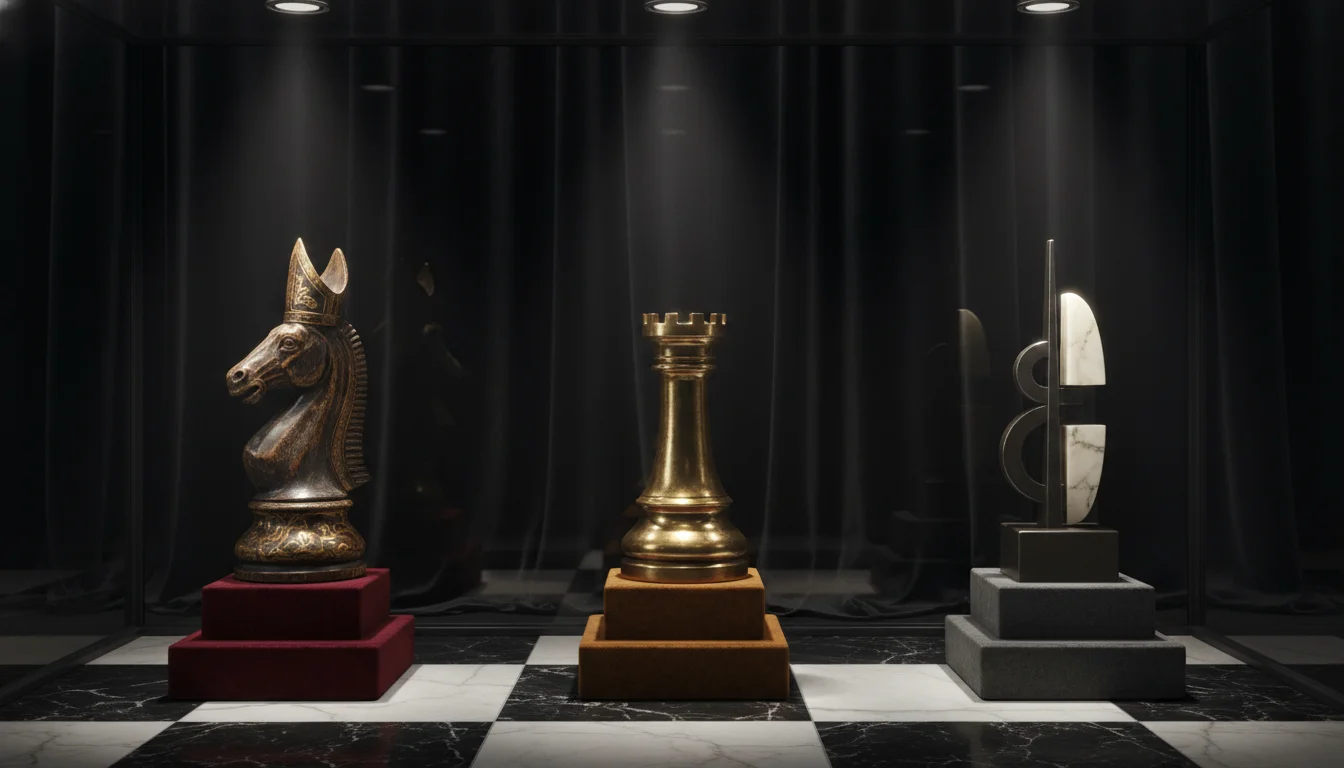
Four Centuries of Compound Pieces: The Long History of the Archbishop in Chess
Published at bigchessgame.com — by the BigChess editorial team
Every now and then, across the long history of chess invention, a particular idea refuses to stay dead. It gets proposed, it gets forgotten, it gets independently rediscovered by someone who has never heard of its predecessor, it gets refined, and eventually it takes permanent root. The Archbishop piece — a compound piece combining the movement of a bishop and a knight — is one of the most persistent of these recurring ideas.
From Pietro Carrera's 1617 proposal to José Raúl Capablanca's 1920s reform plan to Christian Freeling's Grand Chess to Yasser Seirawan's elegant revival to Ralph Betza's theoretical analysis, the Archbishop (or Centaur, or Cardinal, or Cardinal-Bishop, depending on who you ask) has been proposed, analyzed, and embraced by some of the most creative thinkers in chess history. Each time, it appears because it fills a genuine theoretical gap. And each time, it points in the same direction: toward a more complete, more powerful, more elegant chess.
BigChess's Clone piece is the latest — and most fully realized — expression of this four-century tradition. Understanding why the Archbishop keeps being reinvented, and why it is so compelling when it appears, illuminates what the Clone brings to BigChess, available today at bigchessgame.com.
What Is a Compound Piece?
In chess terminology, a compound piece is a piece that combines the movement capabilities of two or more standard pieces. The queen — the most powerful piece in classical chess — is herself a compound piece, combining the movements of the rook and the bishop in a single body. This was not always so: in earlier versions of chess, the queen was one of the weakest pieces on the board, able to move only one square diagonally. The modern queen emerged through a series of rule changes in 15th-century Europe, most famously associated with Spanish chess reformers around 1475.
The success of the queen as a compound piece — she instantly became the dominant force in the game — demonstrated that combining movement types could be extremely powerful. It was natural for chess inventors to wonder: what other combinations might work? What other compound pieces might enrich the game?
Two obvious candidates emerged, based on the pieces that already existed:
- The Amazon or Marshall: combining rook + knight (sometimes also including bishop, making it queen + knight)
- The Archbishop or Cardinal: combining bishop + knight
The Amazon is more powerful but less elegant — it is simply stronger than almost anything it encounters, which makes it difficult to balance. The Archbishop is more interesting precisely because it is more nuanced: its bishop movement gives it range, but its range is constrained by its color commitment; its knight movement fills that color gap but cannot slide freely. The combination is powerful without being overwhelming, complex without being chaotic.
Pietro Carrera, 1617: The First Archbishop
The earliest documented proposal for a bishop+knight compound piece appears in a 1617 treatise by Pietro Carrera, an Italian chess writer who published a work titled Il Gioco degli Scacchi (The Game of Chess). In this remarkable volume, Carrera proposed an expansion of the classical chess board and the addition of two new pieces: the Campione (Champion, combining queen+knight) and the Centauro (Centaur, combining bishop+knight).
Carrera's Centauro is, in movement terms, identical to what we now call the Archbishop and to what BigChess calls the Clone. It moves diagonally any number of squares like a bishop, or leaps in an L-shape like a knight. Carrera placed these new pieces on a 10×8 extended board, with two additional files added to the classical 8×8 layout.
This proposal appeared 27 years before the first modern scientific institution, predated the steam engine by 150 years, and anticipated the development of modern chess variants by nearly three centuries. Carrera was thinking about chess enrichment at exactly the moment when the modern rules had barely been stabilized. His insight was immediate and clear: the bishop's color-bound weakness needed a remedy, and the knight's color-alternating leap was its perfect complement.
Carrera's variant did not gain widespread adoption, partly because the necessary physical equipment was difficult to produce and distribute in 17th-century Italy, and partly because chess culture of the period was conservative — the new queen-centered rules were still being absorbed. But his idea was sound, and it waited.
Capablanca, 1920s: The Archbishop Becomes Famous
The Archbishop's most prominent early advocate was José Raúl Capablanca, the Cuban world chess champion and widely considered one of the greatest chess minds who ever lived. In the late 1920s, Capablanca became increasingly alarmed by what he called the "draw death" of chess — the growing tendency of top-level games to end in draws as players exhausted the possibilities of extensively analyzed opening theory.
His proposed solution was a wholesale reform: expand the board to 10×10 and add two new pieces, the Archbishop (bishop+knight) and the Chancellor (rook+knight). He proposed placing one of each behind each pawn on the extended flanks, giving each player a richer and more varied force.
"Chess is becoming played out. The number of draws in master chess is becoming too large. This makes chess less interesting to the public. The game must be enriched with new elements."
— José Raúl Capablanca
Capablanca's variant received considerable attention because of his stature. He was world champion from 1921 to 1927, one of the strongest players of his era and possibly any era. When he spoke about chess, people listened. His proposal was discussed in chess journals, analyzed by prominent players, and advocated by Capablanca personally until his death in 1942.
The variant was never adopted as an official standard, for a complex mixture of reasons: conservatism within chess officialdom, the difficulty of manufacturing new pieces at scale, and the general preference of the chess community for the familiar. But Capablanca's Archbishop established the piece firmly in the vocabulary of chess invention, and his 10×10 board proposal anticipated BigChess's dimensions by a century.
Christian Freeling's Grand Chess, 1984: The Archbishop in a Complete System
In 1984, Dutch game designer Christian Freeling published the rules for Grand Chess, a 10×10 variant that many consider the most elegant and complete large-board chess game ever designed. Grand Chess is remarkable for a number of reasons, but relevant to our story is its inclusion of a piece called the Cardinal — which combines, once again, bishop and knight movement.
Freeling designed Grand Chess with exceptional care for the interplay of pieces. The Cardinal (Archbishop) is balanced in his system by the Marshal (Chancellor — rook+knight), and both new pieces are available for promotion alongside the standard queen. The 10×10 board gives all pieces room to develop, and the game has a distinctive opening character: pieces begin on the first two ranks rather than just the first rank, and pawns start on the third rank, ensuring a longer development phase and reducing the risk of premature attacks.
Grand Chess has attracted a dedicated following among chess variant enthusiasts and is frequently cited as one of the best large-board chess variants ever created. It demonstrated conclusively that the 10×10 board with an Archbishop-type piece could function as a complete, balanced, and deeply interesting game — not merely an academic proposal.
Freeling's Cardinal is functionally identical to the Clone in movement. The difference lies in the complete game design surrounding it: BigChess introduces additional innovations including the triple pawn step, extended en passant, three-square castling, and its distinctive piece setup, creating a game that shares the Archbishop tradition with Grand Chess while pursuing different design priorities.
Yasser Seirawan's Hawk, 2007: Revival and Refinement
In 2007, grandmaster Yasser Seirawan — an American player who reached the peak of the classical chess world, winning the US Championship and competing at the very highest levels — proposed a variant called Seirawan Chess (also known as S-Chess). This system introduced two new pieces — the Elephant (rook+bishop = queen without the knight component, effectively just another queen) and the Hawk (bishop+knight) — into the standard 8×8 board.
Seirawan's method was ingenious: rather than enlarging the board, he proposed introducing the new pieces gradually. Each player holds their Elephant and Hawk off the board initially. When a piece makes its first move from its starting square, the player may optionally drop the Hawk or Elephant onto that now-vacant square. This avoids the crowding problem that would result from adding two pieces to an already-full 8×8 board.
Seirawan's Hawk is, once again, the bishop+knight compound. His motivation for choosing it was explicit: the Hawk (Archbishop) fills the color-blindness gap in the bishop's movement in a way that no other piece does. It is, he argued, a natural and elegant extension of the existing piece set.
Seirawan Chess attracted attention partly because of its inventor's stature — Seirawan is a respected grandmaster and chess commentator, not a fringe inventor — and partly because it demonstrated that the Archbishop concept could be adapted to fit the classical board's dimensions. This was a different approach from Capablanca and Freeling's 10×10 systems, but it converged on the same central piece.
Ralph Betza's Theoretical Analysis: Why the Archbishop Is Special
Ralph Betza was an American chess player and game theorist who developed the most rigorous mathematical framework for analyzing fairy chess pieces — pieces with non-standard movement rules. His "betza notation" system, developed in the 1990s and published online in the early internet era, provided a way to describe any piece's movement as a combination of atomic movements, and to calculate a piece's approximate value based on its mobility.
Betza analyzed compound pieces extensively, and his findings illuminate why the Archbishop (Clone) is theoretically special.
The Color-Completeness Argument
A bishop in classical chess is permanently bound to one color. A dark-squared bishop can never reach a light square, regardless of how long the game goes on. This is not merely a limitation of individual bishops — it is a structural constraint that has profound implications for chess strategy. The "wrong bishop" endgame, where a player has a bishop that does not control the square in front of their passed pawn's promotion square, is a well-known drawing resource precisely because of color-binding.
The knight, by contrast, alternates colors with every move. A knight on a dark square moves to a light square, and vice versa. This means that two knights can cover both colors, and a single knight, given enough time, can reach any square on the board.
When you combine bishop and knight movement in a single piece, the result is color-complete: the compound piece can reach any square on the board. The bishop's diagonal sliding gives it long-range influence, and the knight's color-alternating jump removes the color constraint. The combination is not merely additive — it creates a qualitatively different kind of piece, one with no structural blind spots.
Betza calculated the Archbishop's value at approximately 7 to 8 pawns, depending on board size — considerably stronger than either the bishop (approximately 3.5 pawns) or the knight (approximately 3.5 pawns) individually, and roughly equivalent to a rook and bishop combined. This is consistent with its power in practice: the Archbishop is typically worth slightly less than the queen but more than any other piece except the queen.
The Knight Fork Enhancement
One of the Archbishop's most dangerous properties is its enhanced ability to execute fork attacks. In classical chess, a knight fork — where the knight attacks two enemy pieces simultaneously — is a standard tactical theme. The Archbishop can execute knight forks with the precision of a knight, but it can also threaten from far away using its bishop movement, setting up fork threats that the opponent must prevent from a distance.
This creates a distinctive tactical danger: the opponent must calculate not just where the Archbishop can go in one move, but where its bishop movement might reposition it in two or three moves before a knight-fork finalization. This lookahead requirement makes the Archbishop harder to defend against than a pure bishop or pure knight, because both long-range and short-range threats must be considered simultaneously.
The BigChess Clone: Inheritor and Innovator
BigChess's Clone, designed by Vilen Fatalov with over 40 years of chess experience and a Candidate Master of Sport background, belongs squarely in this four-century tradition. Its movement is the same as Carrera's Centauro, Capablanca's Archbishop, Freeling's Cardinal, and Seirawan's Hawk: it slides diagonally like a bishop and leaps in an L-shape like a knight. It is color-complete, fork-capable, and more powerful than either component piece alone.
What distinguishes the Clone's implementation in BigChess is the completeness of the surrounding game design. The 10×10 board, as Capablanca and Freeling both independently recognized, is the right size for a game with an Archbishop-type piece — it gives the piece room to develop and maneuver without immediately dominating the cramped tactical space of the 8×8 board. BigChess provides two Clones per side, placing them in positions where they can both influence the center and support flank operations.
The additional rules — triple pawn step, extended en passant, three-square castling, Clone promotion — are designed to ensure that the Clone is not merely an add-on to a classical chess game but an integrated element of a reconceived whole. The triple pawn step creates opening development options appropriate to the larger board. The extended en passant rule prevents the triple pawn step from becoming an exploitable loophole. The three-square castling acknowledges the king's need for greater safety on a wider board. Clone promotion ensures that the endgame dynamics of BigChess differ fundamentally from classical chess, with Clone-versus-queen endgames creating entirely new theoretical questions.
What BigChess Adds to the Tradition
The Archbishop tradition, from Carrera to Seirawan, has always treated the compound piece as a supplement to classical chess — something to add, not something to build around. Capablanca wanted to add it to the existing game. Seirawan designed an elegant mechanism to introduce it to the 8×8 board. Even Grand Chess, while creating a complete new game, was in many ways classical chess scaled up.
BigChess's approach is different: the Clone is integrated from the ground up into a game that is designed as a complete whole. The entire set of rules — board size, pawn movement, castling, promotion — is calibrated around the presence of the Clone as a central element, not an addition. This is the difference between adding a new room to an existing house and designing a new house from scratch to include that room as a structural feature.
The result is a game where the Clone's power is balanced by the game's other innovations, where its endgame properties create genuinely new theoretical questions, and where its tactical possibilities extend across an opening landscape that has not been pre-mapped by centuries of theory. Four hundred years of Archbishop history culminate in a game that actually delivers on the promise those centuries made.
The Archbishop Tradition Across Four Centuries: A Summary
| Year | Inventor | Variant Name | Piece Name | Board |
|---|---|---|---|---|
| 1617 | Pietro Carrera | Carrera's Chess | Centauro | 10×8 |
| ~1927 | José Raúl Capablanca | Capablanca Chess | Archbishop | 10×10 |
| 1984 | Christian Freeling | Grand Chess | Cardinal | 10×10 |
| 2007 | Yasser Seirawan | Seirawan Chess / S-Chess | Hawk | 8×8 (with drops) |
| 2020s | Vilen Fatalov | BigChess | Clone | 10×10 |
Four hundred years. Five independent inventors. One recurring insight: the bishop+knight compound piece fills a genuine gap in the chess piece vocabulary, and the game is richer for its presence.
Join the Archbishop Tradition at BigChess
When you play BigChess at bigchessgame.com, you are participating in one of chess's oldest and most persistent ideas — the desire to create a piece that combines diagonal range with jumping precision, that eliminates the bishop's color-blindness, that creates tactical threats no existing piece can generate alone.
- Command 2 Clones per side — the bishop+knight compound that four centuries of chess inventors have independently rediscovered
- Explore a 10×10 board — the board size that Capablanca, Freeling, and Fatalov all identified as the right canvas for this game
- Develop entirely new strategic and tactical skills around the Clone's unique dual-geometry movement
- Compete with ELO matchmaking, master the game with puzzles, review your progress in game history
- Available on web at bigchessgame.com, iOS, and Android
Carrera imagined it. Capablanca proposed it. Freeling built it. Seirawan refined it. Fatalov completed it.
Now you can play it. Visit bigchessgame.com and discover what four centuries of chess invention have been pointing toward.
About the Author
Vilen Fatalov
Creator of Big Chess
Ukrainian entrepreneur and chess enthusiast with over 40 years of chess experience and a Candidate Master of Sport title. Creator of Big Chess.